Let's talk about the mismatch nobody mentions
Honestly, being out of sync with your partner is one of the most common relationship issues I see. One person needs 20 minutes to warm up; the other is ready in five. One person's arousal builds slowly; the other spikes fast then drops. One person craves intensity; the other prefers gentleness. These aren't problems to fix. They're just the reality of two different bodies and two different nervous systems in one bed.
The problem isn't the mismatch. It's thinking you have to perform it away.
Why couples feel out of sync in the first place
There are three big reasons this happens. First, hormones create different rhythms even within a single person. Your arousal cycle changes across your menstrual cycle, age, stress levels, and medication. Your partner's timeline shifts too. Second, responsive versus spontaneous desire is real. Some people feel desire first, then arousal follows. Others need physical stimulation to spark desire. If one of you is spontaneous and the other is responsive, it looks like one person "always wants it" and the other "never does." It's just different wiring. Third, trauma, anxiety, or past relationships can create hesitation that reads as low interest, when it's actually activation energy that needs building.
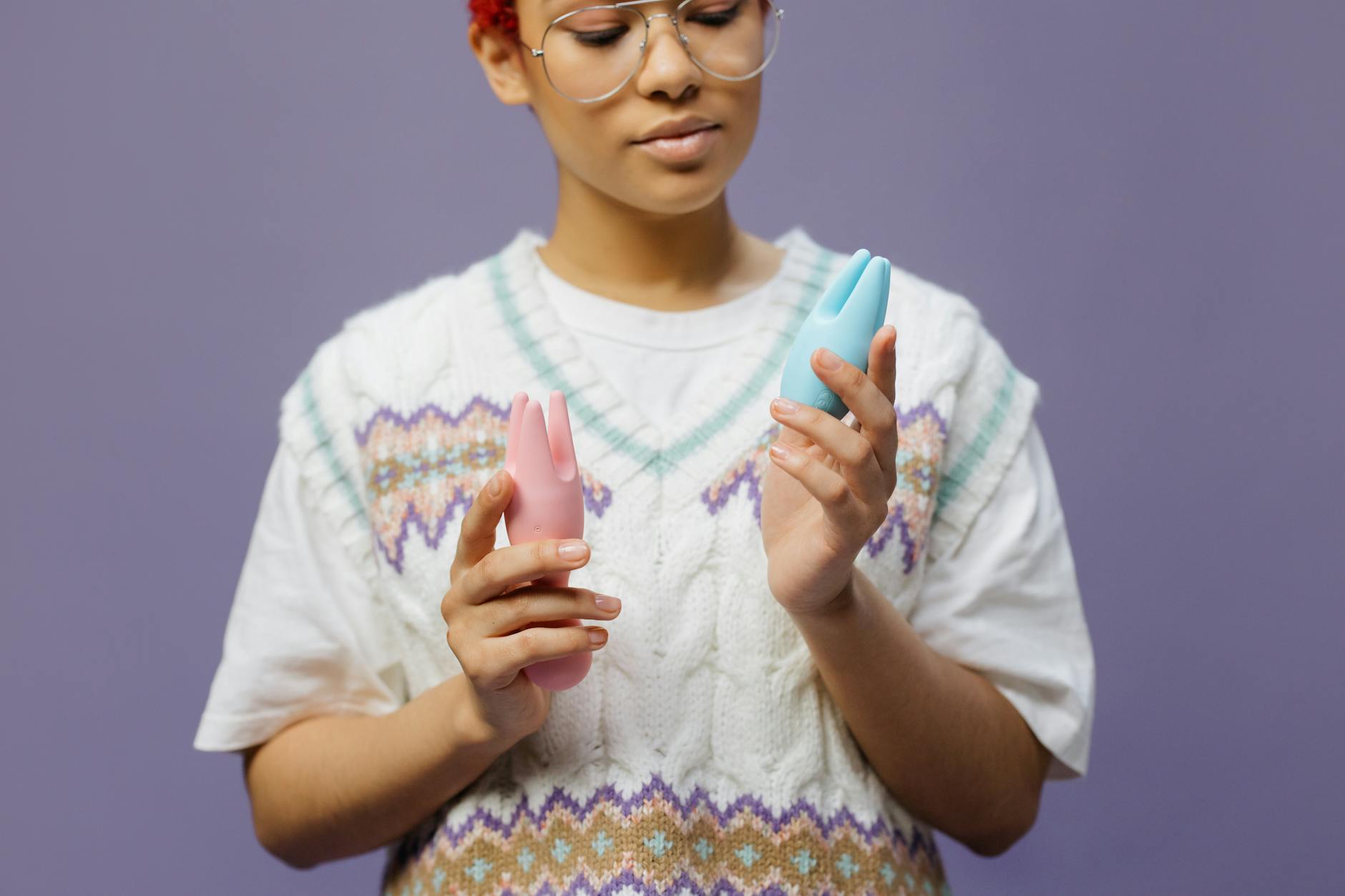
Here's where lemon vibrators come in. They're not a band-aid for incompatibility. They're a way to honor two different bodies without forcing them into the same timeline.
How a clitoral vibrator solves the timing problem
When desire is mismatched, someone often feels rushed or pressured into sex before they're genuinely aroused. This creates resentment, and resentment kills desire permanently. A lemon vibrator lets the person who needs more time actually get there without relying on their partner's manual effort (which can feel performative or obligatory on both sides).
Here's the practical shift: partner A initiates and starts foreplay. Partner B uses the Lem or another clitoral vibrator to build their own arousal in parallel. This is radically different from "I'll wait while you get ready." Instead, it's "We're both actively building this together, on our own timelines."
The person with the longer warm-up gets to their arousal level without guilt. The person who's ready quickly doesn't lose momentum waiting. You meet in the middle.
The intensity problem gets easier with a lemon vibrator
Mismatched intensity needs are a hidden relationship tension. Partner A loves deep, sustained pressure. Partner B gets overstimulated by intensity and prefers rhythm and lightness. Without a tool, the partner who prefers intensity either resents not getting what they need, or the other partner pushes through overstimulation to please them.
A clitoral vibrator like the Lem lets both people get what they actually need. One partner can control their own intensity independently. If you're using the vibrator on yourself while your partner is inside you, you're choosing the pressure and rhythm that feels good for your body. If you're using it together, your partner can see exactly what intensity makes you come and adjust everything else accordingly.
The Lem's suction design makes this particularly useful because the intensity isn't just about vibration speed. It's about pressure, rhythm, and focusing the stimulation exactly where it concentrates sensation most. You can use it at lower intensities and still feel a huge amount.
When one person's arousal is faster or slower
Pacing mismatches feel incredibly vulnerable because they touch on fear. "Am I not attractive enough?" or "Is my partner too demanding?" Neither is true. Fast arousal doesn't mean high desire. Slow arousal doesn't mean low desire. It's tempo, not thermometer.
Lemon clitoral vibrators solve this by letting arousal exist on its own timeline without judgment. If you're the slower partner, you can use the vibrator during foreplay, giving your nervous system the specific type of stimulation it needs to wake up. If you're the faster partner, you can use the vibrator while your partner catches up, staying present without losing sensation.
The key is framing it correctly in your own head first. This isn't "your partner is slow," it's "we get there by different routes, and both routes are valid." Once you believe that, using a vibrator together becomes neutral information: "Here's what helps my body."
The psychological piece matters more than the tool
Here's what I see go wrong: couples introduce a vibrator thinking it'll fix a relationship problem. It won't. A tool can't fix resentment, poor communication, or disconnection. It can only help if the emotional foundation is sound.
Before you bring a lemon vibrator into partnered sex, have a conversation (not in bed). Say something like: "I've noticed we sometimes want sex at different times or intensities. That's normal and not a problem, but I want us both to feel good. I'm thinking about using a vibrator because it lets me explore what actually feels good for my body. I'd love to try it together." This is collaborative. It's not "you're not satisfying me." It's "let's both get what we need."
The second thing that matters: watch for shame. If either partner feels like the vibrator means they're "not enough," the tool becomes a symbol of failure instead of a bridge. Check in after using it together. Ask what felt good and what felt weird. Adjust. Your partner might feel weird the first time seeing you use a vibrator. That's normal. Weird feelings don't mean bad feelings. They just mean new.
Using lemon vibrators when one partner has lower desire
This one requires nuance. If your partner has significantly lower desire, a vibrator alone won't fix it. But if the lower desire is situational (stressed, tired, distracted), a vibrator can help you both reconnect without making them feel pressured to perform.
Instead of "I want to have sex and you don't," the conversation becomes "I miss feeling close to you, and I miss feeling good in my body. Can we spend time together where I use the vibrator and you're present with me? No pressure for anything else." This is intimate without demanding they perform arousal they're not feeling.
For the partner with lower desire, being present while your partner uses a clitoral vibrator can actually reignite your own desire. Watching your partner experience genuine pleasure, without you having to perform, is often way more arousing than trying to drum up sex you don't feel like having.
If the lower desire is deeper than that (relationship dissatisfaction, past trauma, medication side effects), that needs a separate conversation and possibly a therapist. A lemon vibrator helps with timing and intensity mismatch. It doesn't fix fundamental disconnection.
How to talk about it without making it awkward
You're going to feel awkward anyway. That's fine. Awkwardness just means you're talking about something real.
Start small. Don't make a whole thing of it. You can say: "I've been thinking about trying a vibrator. It seems like it would help my body relax more during sex." That's it. You don't need to justify or explain. If your partner asks questions, answer them simply. "Why now?" Because I realized I want to experience more pleasure and this seems like a good way."
The first time you use it together, don't make it the main event. Use it during foreplay. Use it while your partner is inside you. Use it after. The less fanfare, the less weight it carries. It's just a thing you're both comfortable with.
If your partner seems resistant, ask what the resistance is about. Often it's not about the vibrator itself. It's about worry that you're not satisfied, or fear that they're being replaced, or just visual discomfort with the unfamiliar. Those are real feelings worth listening to. You might discover that your partner would feel more connected if you used it while looking at them, or if they could hold it, or if you tried it together in a specific way.
And honestly? Sometimes introducing a vibrator is the conversation that opens up a bigger conversation about what you both actually want from sex. Often that's the real gift.
Reframing pleasure as a shared project
The deepest shift that happens when couples use lemon vibrators together is this: sex stops being about "giving" and "receiving" and becomes about two people both actively pursuing feeling good. That's huge.
When you use a clitoral vibrator, you're taking responsibility for your own pleasure. Your partner sees you do it, and often, watching you take that responsibility is incredibly hot. It takes the pressure off them to create your orgasm through sheer willpower or technique. Instead, you're collaborating. They can hold you, touch you, be inside you, watch you, or just be present. And you're doing the thing that makes your body sing.
This is true whether you're synced or not. But when you're out of sync, it becomes a way to stop resenting the mismatch and start using it as information about what you both need.
FAQ: Using lemon vibrators when you're out of sync
Can using a vibrator together actually improve desire mismatch?
Not directly. If one person has low desire because they're depressed or the relationship has real problems, a vibrator won't fix that. But it can reduce resentment and create positive sexual experiences even when timing doesn't match. That matters for long-term connection.
What if my partner feels threatened by a vibrator?
That's real and common. Your partner might worry it means you're not attracted to them, or that they're not "enough." Have a conversation outside the bedroom. Be specific: "I love having sex with you. I also want to explore what my body responds to most. This tool helps me do that. I want you with me when I use it." If the threat persists, a couples therapist can help you both untangle what's actually at stake emotionally.
Is it okay to use a vibrator if my partner isn't interested in sex?
Yes, absolutely. You can use it alone or with your partner present but not participating. You might find that watching you feel pleasure actually makes your partner want to be more involved. And even if they never do, your pleasure matters whether or not your partner is in the mood. Taking care of your own sexual needs doesn't betray the relationship. It sustains you.
How do I know if a clitoral vibrator like the Lem is right for us?
If you're out of sync around arousal timing, intensity, or responsive versus spontaneous desire, a clitoral vibrator is worth trying. The Lem works well for couples because the suction design is different from traditional vibration. It lets you use lower settings and still feel a lot, which means less overstimulation and more control. Start with lower intensities.
Should I use it every time we have sex?
No. Some people love incorporating it regularly. Others use it occasionally when they're feeling less aroused. Some use it only when they're alone. There's no "should." Pay attention to what actually increases pleasure and connection for both of you, and do that.
What if we use it together and it feels awkward or doesn't work?
First attempt almost always feels weird. That doesn't mean it's not working. It might take three or four times for awkwardness to fade and for you both to figure out what actually feels good. If after a few genuine tries it still doesn't work, that's fine too. Not every tool fits every couple. But most of the time, the awkwardness is just unfamiliarity, not a sign it's wrong.
The real gift of using vibrators together
When you stop seeing the mismatch as a problem and start seeing it as a fact that needs solving, everything shifts. You're not trying to become the same. You're trying to honor two different bodies and find ways they can both feel good.
Lemon clitoral vibrators do that. They let you build arousal on your own timeline, find your own intensity, and take active pleasure in your body without waiting for perfect synchronization that might never come. And honestly? Couples who learn to do that often report that their sex life gets better overall. Not because the mismatch disappeared, but because they finally stopped fighting it.
If you're feeling out of sync with your partner, a vibrator isn't a sign something's broken. It's a sign you're both ready to get creative about what works. That's something worth celebrating.