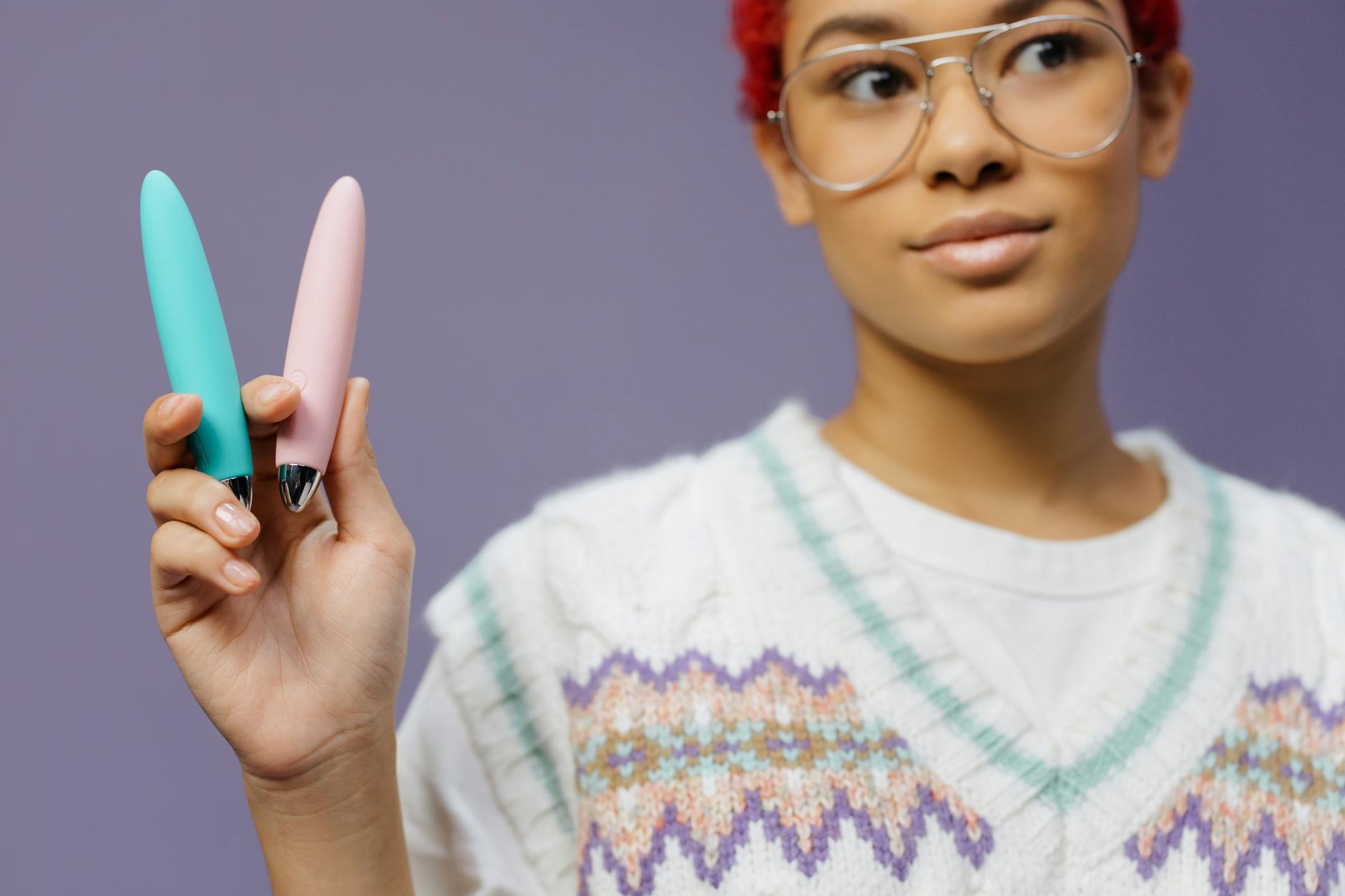
Let's talk about what happens to your body after a relationship ends
When a long-term relationship closes, pleasure doesn't just pause. It fractures. Your body stops responding to touch the way it used to because the context that shaped that response is gone. Your nervous system is grieving. Your brain is rewiring its sense of safety and desire. And somewhere in all of that, you're supposed to figure out how to want anything again.
Honestly? That's a lot. And it's rarely talked about because we treat sexuality as something that exists independent of relationship dynamics. It doesn't. It lives inside your partnership. When the partnership changes, so does your capacity for pleasure.
The good news is that rediscovering solo pleasure after a major relationship shift isn't just possible. It's often more powerful than people expect. And lemon clitoral vibrators can be genuinely helpful in that process, not because they're magic, but because of how they work with your body's actual neurology.
Why pleasure often disappears when a relationship changes
Your sexual response isn't just physical. It's woven through your emotional state, your sense of safety, your brain's reward pathways, and your nervous system's regulation. In a long-term relationship, especially one that felt secure, your body learned to respond in a specific context. That partner's touch. That bedroom. Those patterns. That familiar presence.
When the relationship ends or shifts dramatically, all of that context vanishes. Your brain has to essentially relearn what safety feels like during intimacy. Your nervous system has lost its anchor. And your body, which became conditioned to respond to this one person's presence, doesn't know how to respond solo anymore.
This isn't a sign that something's broken. It's actually neurologically normal. It's also temporary, though it doesn't always feel that way.
The specific nervous system barrier after relationship loss
When you're with a partner long-term, your arousal response is tied to their presence. Their voice. The familiar pressure of their body. The known rhythm. Your parasympathetic nervous system (the part that lets you relax into pleasure) activates because it recognizes the context as safe.
Solo pleasure requires something different. You have to activate arousal without that external anchor. Your nervous system has to regulate itself. And if you're grieving, anxious, or rebuilding your sense of self, that solo regulation feels harder because it actually is harder.
Lemon clitoral vibrators help because they provide a specific kind of sensory input that's distinct from partnered touch. It's consistent, controllable, and you're entirely in charge of the pace and pressure. That control matters. It signals to your nervous system that this experience is about your body's needs, not someone else's presence or satisfaction.
How the suction mechanism works for nervous system reset
Unlike traditional vibrators that rely on vibration intensity alone, lemon vibrators use a suction and pulsing mechanism that mimics the body's natural nerve response more closely. The stimulation is rhythmic without being harsh. It's consistent without feeling mechanical. And crucially, you control every variable.
This matters post-relationship because it gives you the chance to rewire your nervous system's response without a partner's expectations layered on top. You're not performing. You're not calibrating to someone else's timing. You're purely responding to what your body wants in that moment.
Many people find that after a breakup or relationship shift, the first orgasm solo feels awkward or even impossible. The suction mechanism on lemon vibrators is gentler on reactivating nerve endings that have been dormant, which means you can build sensation slowly without overstimulation or frustration.
Permission and ownership as part of recovery
Here's something that shows up constantly in my practice: after a breakup, people often feel guilty about pleasure. There's a strange shadow guilt. Like wanting your own orgasm feels disloyal, or frivolous, or too focused on "moving on" before it's time.
Using a lemon clitoral vibrator is a concrete act of permission. It says to yourself, "My pleasure matters independent of whether I'm in a relationship." It sounds simple, but neurologically and emotionally, it's significant. You're actively choosing sensation. You're choosing to prioritize your own nervous system's wellbeing.
That choice, repeated consistently, rewires your brain's relationship with desire. You start to remember that pleasure is something you can give yourself. That your body's capacity for joy doesn't depend on a partner. That you get to define what turns you on now, without anyone else's preferences shaping the answer.
The practical timeline for rebuilding solo pleasure
There's no hard deadline, but most of my clients report that consistent solo exploration (3-4 times per week) over 4-6 weeks starts to shift the nervous system. Not because the vibrator "fixes" anything, but because repetition helps your nervous system learn a new pattern. Safe. Controllable. Solo. Pleasurable.
The first few sessions often feel mechanical or disconnected. That's normal. Your brain is literally rebuilding its pleasure circuitry. By week 3-4, most people report a shift. Sensation becomes more vivid. Arousal builds faster. The experience starts to feel less like effort and more like genuine pleasure.
Start with lower intensity settings. Lemon vibrators typically have 5-10 intensity levels. Use level 1-3 for the first 2-3 weeks. Your goal isn't orgasm. It's reconnection. It's rewiring the signal that solo touch is safe and good and worth your time.
How to use a lemon vibrator as a recovery tool, not a band-aid
There's a difference between using a vibrator to numb out and using it as part of intentional nerve reactivation. The first is distraction. The second is recovery.
Intentional use means: set aside time without other stimulation nearby. Silence or soft background sound. Comfortable position. Low intensity. No pressure to orgasm. The goal is presence and sensation, not outcome.
This approach mirrors what happens in physical therapy for nerve damage. You're retraining your nervous system to recognize and process pleasure signals. Rushing that process or trying to force an orgasm actually works against it.
Many people also find it helpful to pair this with reflection. After a session, spend a minute noticing what you felt, where you felt it, what intensity worked. This isn't journaling therapy. It's just reconnecting the loop between sensation and awareness. Over time, that loop becomes stronger.
When to bring a partner back into the picture
If you're eventually rebuilding a relationship or entering a new one, the solo pleasure work actually matters for that too. You've reestablished your nervous system's capacity to feel. You've reconnected with what you actually want. You've practiced being in control of your own arousal.
All of that translates into better partnered sex. Because now you're coming from a place of knowing what you respond to, rather than trying to rediscover it while someone else is present.
Some people also find that they want to keep the solo practice running parallel to partnered sex, not as a replacement, but as a way to maintain that autonomy and pleasure independence. That's valid. Your sexuality doesn't have to be partnered-only just because you have a partner.
The emotional work alongside the physical practice
All of this assumes that you're doing the actual emotional processing alongside the physical recovery. If you're using a lemon vibrator to avoid grief or skip past the actual relationship work, it won't stick. The pleasure will feel hollow because some part of your nervous system is still in protection mode.
If you're processing the relationship genuinely, grieving where you need to, maybe working with a therapist, rebuilding your sense of identity, then the solo pleasure work becomes part of that larger recovery. It signals to yourself that you're moving toward wholeness, not just distraction.
FAQs about reclaiming pleasure after relationship changes
How long after a breakup is it normal to start wanting pleasure again?
There's no timeline. Some people feel ready in weeks. Others take months. What matters isn't the speed, but that you feel emotionally ready, not just physically curious. If you're using solo pleasure as a way to numb emotional pain, that's still grief processing, and it's worth pausing to tend to the actual feelings first. If you're using it as part of intentional recovery, that's different.
Can lemon clitoral vibrators help if I'm feeling disconnected from my body?
Often, yes. Disconnection from the body is common after relationship loss because so much of your physical identity was tied to that partnership. Gentle, consistent sensory input (like the suction mechanism on a lem vibrator) can help reestablish the connection between your nervous system and physical sensation. Start very low intensity and very patient. This isn't about pushing sensation. It's about listening.
What if I feel guilty using a vibrator after a breakup?
That guilt is real and it's also often internalized from old messaging about female sexuality being conditional on partnership. Reframe it: you're not replacing a partner. You're maintaining your own health. You're choosing to take care of your nervous system's wellbeing. That's as legitimate as stretching or hydration. Your body deserves attention whether you're in a relationship or not.
Should I try solo pleasure work before jumping into dating again?
There's no rule, but many therapists recommend it. When you've done some solo exploration and reconnection, you're less likely to seek a new partner to "fix" your pleasure. You're also clearer about what you actually want sexually versus what you're seeking as comfort. That clarity makes healthier dating choices more likely.
What if I try using a lemon vibrator and nothing happens?
Nothing happening is data. It might mean your nervous system still needs more time. It might mean the intensity or sensation type isn't right for your body. It might mean you're trying too hard. If nothing is happening after 4-6 weeks of consistent, gentle exploration, that's worth checking in with a therapist or sex coach about. Sometimes there's emotional material underneath that needs attention first.
Is it weird to use a vibrator while single?
No. Solo pleasure is part of normal human sexuality whether you're partnered or not. Lemon clitoral vibrators are designed for solo use. Using one is self-care, not a substitute for a partner. It's also not something you need to "graduate" away from if you eventually partner up again. Plenty of people maintain solo pleasure practices alongside partnered sex because it keeps them connected to their own desire and nerve responsiveness.
The larger point about pleasure and identity
Recovering pleasure after a relationship shift isn't really about the vibrator. It's about deciding that your body's capacity for joy matters independent of your relationship status. It's about rewiring the neural pathways that connected pleasure to a specific partner and remembering that pleasure lives inside you, not outside of you.
Lemon vibrators help because they're a tool designed specifically for clitoral pleasure and they're controllable. But the real work is the decision to tend to yourself. The consistency of showing up for your own nervous system. The permission you give yourself to prioritize your own sensation.
That's the recovery. The vibrator is just the vehicle.
If you're navigating this transition and want support beyond solo exploration, that's where coaching or therapy can help. You deserve to move through relationship changes with attention to both your emotional and physical wellbeing.
References & Sources
Gottman, J. M., & Silver, N. (2015). The Seven Principles for Making Marriage Work. Harmondsworth: Penguin.
Perelman, M. A. (2005). Psychosexual therapy for erectile dysfunction: An evidence-based approach. Journal of Andrology, 25(4), 496-506.
Van der Kolk, B. (2014). The Body Keeps the Score. Penguin Books.
Dublin, L. I., & Dublin, J. (2011). The pleasure of the brain. Journal of Sexual Medicine, 8(2), 295-303.