Let's talk about what nobody warns you about with birth control
You switched pills, started the shot, got an IUD, or changed methods. Within weeks or months, sex feels different. Not bad exactly, but muted. Sensation that used to arrive reliably now takes forever, or arrives somewhere else entirely, or doesn't show up at all.
Then you spend three months wondering if it's psychological, if your relationship shifted, if you're stressed, if something's wrong with you. Spoiler: it's the hormones. And it's fixable.
Why birth control flattens sensation
Every hormonal birth control method works by suppressing or altering estrogen and progestin levels. This is literally the point. But your nervous system doesn't just notice the pregnancy prevention part. It notices all of it.
Here's what happens physiologically. Estrogen affects clitoral blood flow, tissue thickness, and the sensitivity of nerve endings in the vulva. When estrogen dips, blood flow to the clitoris decreases. The tissue becomes slightly thinner and less responsive. Sensation doesn't disappear, but it muffles, like someone put cotton over your skin.
The effect varies wildly between people and between different formulations. Some people feel almost nothing on the pill. Others on an IUD report no change at all. The newer progestin-only methods sometimes feel different than older combined pills. The only pattern that's consistent is that there is no consistent pattern.
What matters: if you notice it, you're not imagining it.
The psychological layer that makes it worse
The physical dulling compounds itself emotionally. You used to feel aroused after five minutes of touch. Now it takes fifteen. So your partner keeps going, but you're watching the clock, wondering if something's broken. Your brain floods with doubt. Doubt kills arousal faster than anything else.
You also start to anticipate the flatness. You approach sex already braced for it not to feel good. And it doesn't. Then you avoid initiating because why set yourself up for disappointment. Then your partner wonders if you're losing interest in them. Then suddenly you're in a conversation about desire that's actually about birth control side effects wearing a relational disguise.
This is why separating the two conversations matters so much.
What changes and what doesn't
Your ability to orgasm: usually still there. The pathway is still intact. Your brain's capacity for pleasure: unchanged. The clitoral nerve density: the same.
What actually changes is how much stimulation you need to reach that pathway. With hormonal birth control, the volume on sensation gets turned down. You're not broken. The system just needs more input to hit the same threshold.
This is exactly what clitoral vibrators solve.
How lemon vibrators work when sensation feels muted
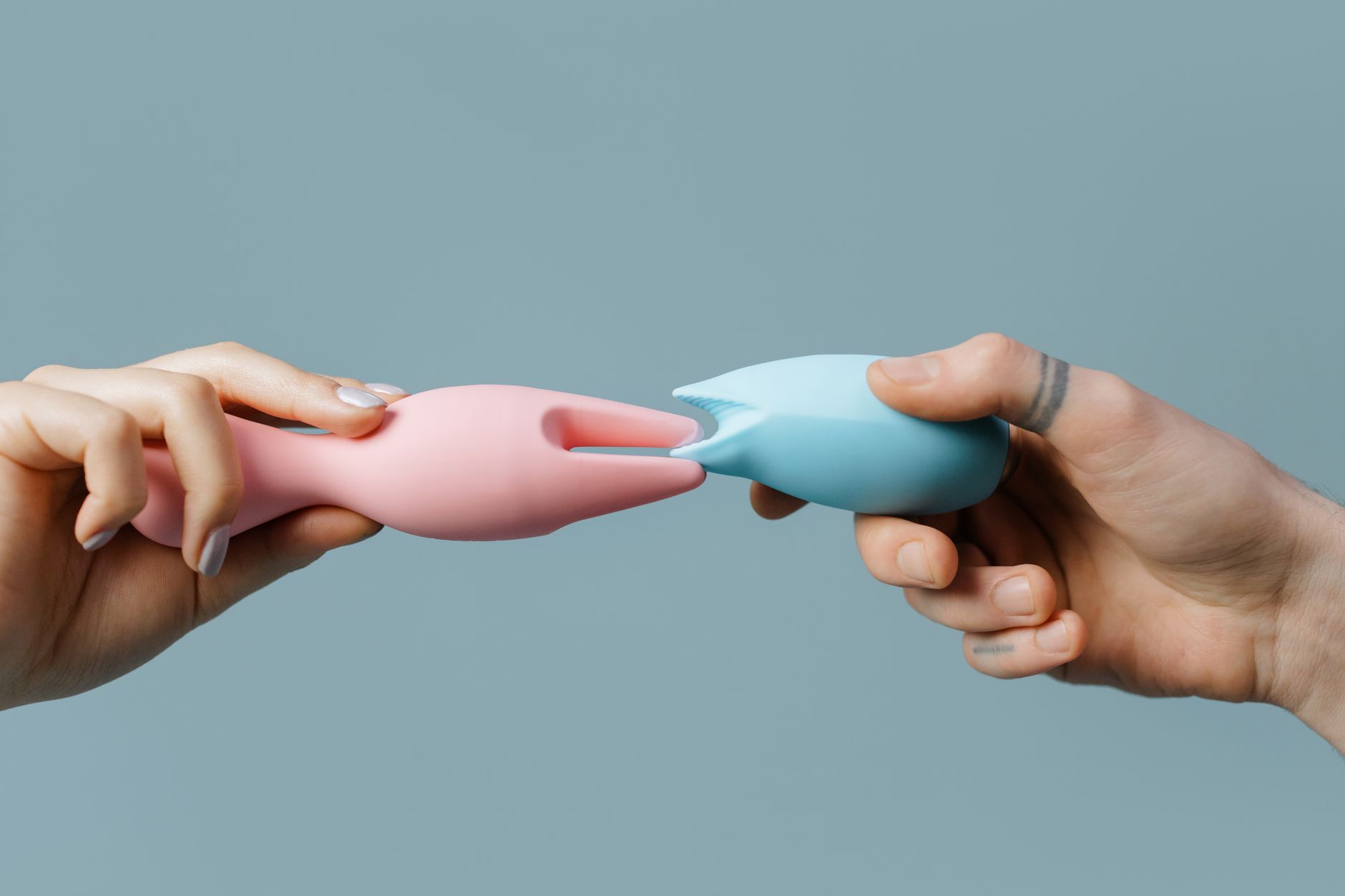
Let's be specific about the mechanism. A vibrator like the Lem doesn't add sensation out of nowhere. It amplifies the sensation that's already there by delivering consistent, high-frequency stimulation to the most sensitive tissue.
When your clitoris is less responsive to touch because of hormonal changes, a vibrator bypasses the need to generate that stimulation through manual friction alone. It's the difference between trying to hear someone whisper in a loud room versus turning up the volume on the speaker. The message is the same. The amplification makes it audible.
The design of the Lem matters here. Clitoral vibrators work differently than internal vibrators. They focus intensity on the external clitoris and the network of nerve endings around it, which is where sensation tends to dull first on hormonal birth control. The air-suction pattern creates a rhythmic pressure that many people find cuts through that muffled feeling faster than traditional buzzing vibrations.
You're not adding something your body can't do. You're giving your body the signal it needs to wake up.
Practical adjustments while you rebuild sensation
Three things I recommend to everyone dealing with birth control numbing.
Start with longer foreplay. Not as a workaround, but as actual foreplay. Your body needs fifteen to twenty minutes to build arousal now instead of five. That's not a flaw. That's information. Work with it rather than against it. Build in touch that isn't goal-oriented yet. Let sensation accumulate.
Use a clitoral vibrator on lower settings first. If you already own vibrators, resist the urge to jump to your usual speed. Start at pattern one or two and let your body rediscover the feeling. You're not broken enough to need maximum intensity. You just need the amplification.
Experiment with different patterns. This matters more on birth control than you might think. The pattern that worked for you pre-birth control might not be the one that cuts through the hormonal numbing now. Try pulsing patterns before steady vibration. Try rhythm changes. Your nervous system is literally different right now. It might respond to something you didn't feel before.
When to consider switching methods
If sensation loss is severe enough to affect your quality of life or your relationship, bringing it up with your provider is worth it. You have options.
Some people find that switching from a combined pill to a progestin-only method, or vice versa, changes the impact on sensation. The copper IUD contains no hormones at all, which means some people experience sensation returning to baseline. But copper IUDs come with their own trade-offs, usually heavier periods.
The patch, the ring, and the shot all use different delivery systems and hormone combinations. None of them is universally better for sensation. What matters is finding the one that matches your body's response.
Honestly though, most people don't switch methods just for sensation. But knowing it's an option if the numbing is really severe can help you feel less stuck.
Why your partner might not understand this
Here's the thing that derails a lot of conversations. Your partner might interpret the sensation change as a change in attraction or desire. They might assume you're less interested in them because you need more stimulation now.
Reframing helps. "My body's response to touch changed because of my birth control, not because of how I feel about you." Then the practical part: "I need more consistent stimulation to feel what I used to feel. That doesn't mean something's wrong. It means we might try something like this" (and then you show them the Lem or whatever tool you've chosen).
Most partners actually get it pretty quickly once they understand it's a physiological shift, not an emotional one. Some even find it freeing because it removes the pressure of trying to be spontaneously aroused on a schedule that no longer works.
Reclaiming sensation you didn't think would come back
Here's what I see over and over. Someone starts using a clitoral vibrator because their sensation flatlined on birth control. Within a couple weeks, they report feeling sensation returning not just during vibrator use, but during regular sex too. The nervous system seems to wake up.
The vibrator isn't creating fake sensation. It's signaling to your body that clitoral stimulation is available and worth paying attention to. Your nervous system responds by upregulating sensitivity again.
Your pleasure is not broken. It's just operating under different parameters right now. The right tool, combined with a little patience and information, usually brings you back.
FAQ: Birth Control, Sensation, and Clitoral Vibrators
Why does my birth control make sensation feel numb when it's supposed to protect me?
Birth control works by altering hormone levels to prevent pregnancy. Those same hormones regulate blood flow, tissue thickness, and nerve sensitivity in the vulva. The side effect is separate from the contraceptive function, but it's real. It's not a failure of the method. It's a trade-off some people experience and some don't.
Can I use a lemon clitoral vibrator if I'm on birth control and my sensation is already low?
Absolutely. In fact, many people find that vibrators are especially helpful during this exact situation. A lemon clitoral vibrator can bypass the need for your body to generate sufficient sensation alone. It amplifies the signals your nervous system is already capable of processing.
Will using a vibrator make my sensation even more numb over time?
No. This is a common fear but not how the body works. Regular vibrator use doesn't dull sensation. If anything, consistent stimulation can help your nervous system recognize and respond to clitoral signals more readily. The concern usually comes from a misunderstanding of how vibration works.
How long does it take for sensation to return after I start using a clitoral vibrator?
It varies. Some people notice a difference within a few sessions. Others take a couple weeks. The timeline depends on how long you've been on your current birth control, how much sensation dulled, and your individual nervous system. Be patient. Consistent use matters more than intensity.
Should I tell my partner I'm using a vibrator because of my birth control changes?
It depends on your relationship and communication style, but I lean toward yes. Partners often assume numbed sensation means waning attraction. Explaining the birth control connection removes that anxiety and opens a conversation about what you both need. Many partners feel relieved to understand there's a physiological reason and a practical solution.
Is switching birth control methods the only way to fix this?
No. Some people do switch methods and feel the difference immediately. Others find that adding a clitoral vibrator to their routine restores enough sensation to feel satisfied without changing contraception. Both are valid. It depends on whether the sensation loss is severe enough to outweigh the benefits of your current method.
Final thought
Birth control numbing is real and it's not your fault. Your body isn't broken. Your pleasure capacity isn't diminished. You're just working with a different neurological setup right now. Once you understand that, you can get practical about solutions. For a lot of people, a clitoral vibrator like the Lem gives them back what they thought they'd lost. It's worth trying before you assume this is just how sex feels now.
Your sensation matters. Your pleasure matters. Don't settle for muted.