
Let's talk about the quiet killer of pleasure
You're not taking too long to come. Your partner isn't losing patience (even if it feels that way). You're just carrying a clock in your head that wasn't there before. Speed anxiety—the felt sense that you're supposed to orgasm within a certain window—doesn't just slow things down. It stops them entirely.
I see this constantly in couples work. One person becomes hyperaware of time, starts performing rather than feeling, and suddenly nothing lands. The irony is that the harder you push toward the finish line, the further away it moves.
How speed anxiety wrecks the nervous system
When you're rushing, your body isn't in the parasympathetic nervous system where pleasure lives. You're in sympathetic overdrive—fight or flight. Your pelvic floor tenses. Blood doesn't flow to the clitoris the way it should. Your brain can't actually register the sensations happening because you're too busy monitoring whether it's "taking too long."
This is why lemon vibrators change the game for people with speed anxiety. Air-suction clitoral vibrators don't require you to earn an orgasm through friction or technique. They work with your nervous system, not against it. You can set a pattern, step back mentally, and let your body respond without the constant internal commentary about pace.
The mechanism matters here. When you're using a lemon clitoral vibrator at a steady, gentle rhythm, your nervous system has permission to relax. You're not controlling the sensation moment to moment. The device is. That external control frees up mental space for actual pleasure.
The partner pressure versus self-imposed pressure split
These are two different problems, and they need different solutions. If your partner is actually rushing you, that's a conversation about what sex means to them and what foreplay actually is. That's a relationship issue, not a vibrator issue.
But most speed anxiety comes from inside. You learned somewhere that good sex is efficient sex. Maybe a past partner seemed bored. Maybe you grew up thinking female desire was an inconvenience. Maybe you're just naturally goal-oriented and you've turned pleasure into another thing to achieve.
A lemon vibrator helps with self-imposed pressure because it removes the goal. You're not trying to come. You're exploring sensation. There's no finish line because the device does the heavy lifting. You can spend 30 minutes at pattern three, or five, or whatever, and it's all equally valid.
Why steady stimulation actually retrains your nervous system
One of the smartest things about air-suction vibrators for speed anxiety is that they teach your body what unhurried pleasure feels like. If you've spent years (or decades) rushing, your nervous system doesn't actually know how to do slow.
Using a lemon clitoral vibrator at lower intensities for extended periods essentially retrains your baseline. You start at pattern one. You stay there for 10 minutes. You notice what actually feels good instead of what feels like progress. Orgasm becomes optional, not mandatory.
Over time, this rewires how you approach sex with partners too. You stop feeling the clock. You actually know what you want because you've spent time feeling it.
Practical setup for slow pleasure sessions
If speed anxiety is your issue, you need to create conditions where rushing doesn't feel necessary. This means time, no interruptions, and zero performance pressure.
Start alone. Use your lemon vibrator at the lowest pattern for 15 to 20 minutes without an orgasm goal. Just feel. If you come, great. If you don't, equally fine. The point is proving to your nervous system that pleasure without a deadline is possible.
When you do this regularly, something shifts. Your body learns that orgasm is not the only measure of good sex. Sensation is. Relaxation is. Time spent in your own pleasure is.
If you're partnered, tell them explicitly: "I'm working on my relationship with my own pace." You don't owe them the details, but they deserve to know something is changing. Some partners will get it immediately. Others will need reassurance that this isn't about them.
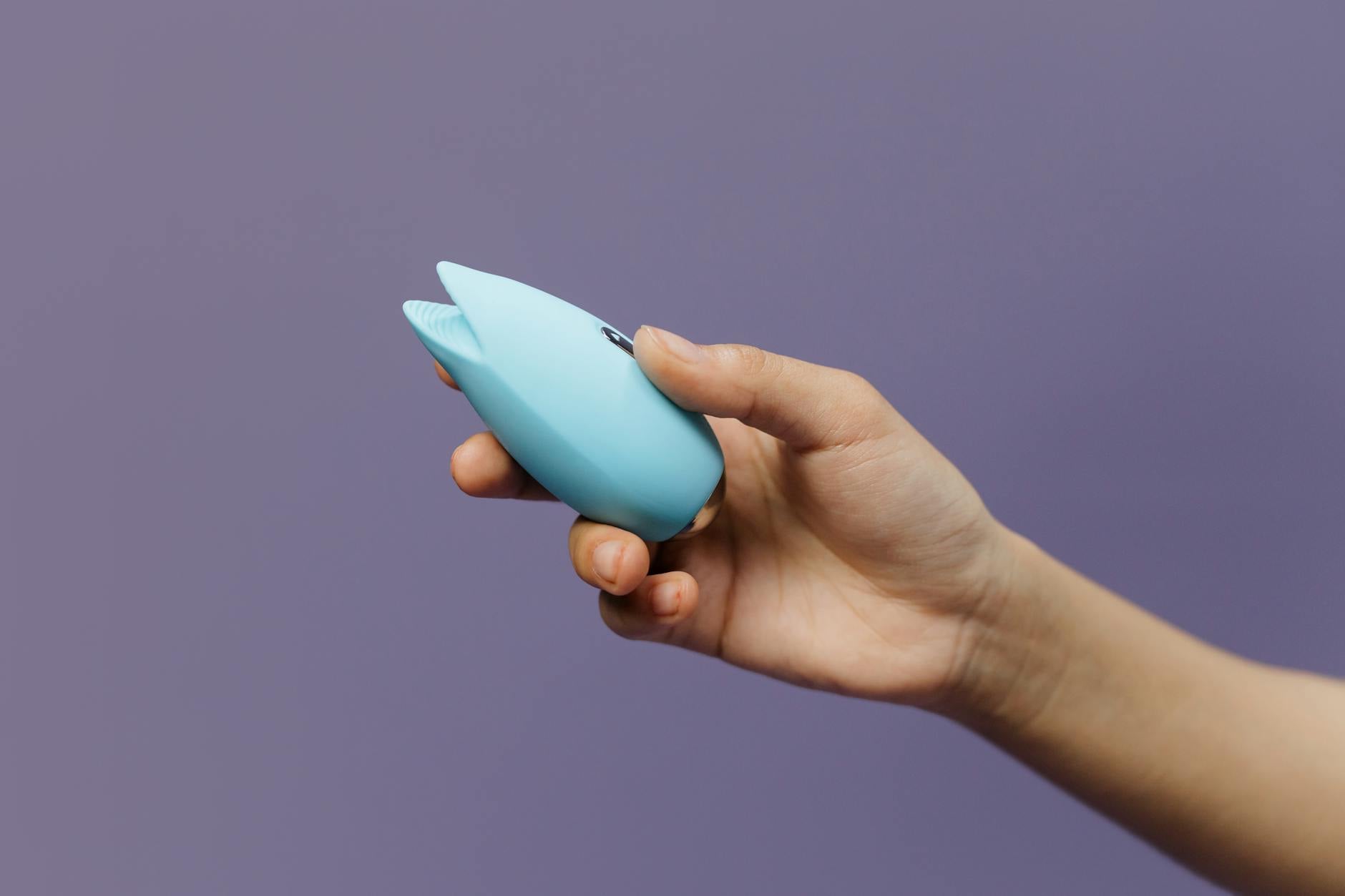
Photo by cottonbro studio on Pexels
The mental shift that actually breaks the cycle
Speed anxiety feeds on performance energy. You're proving something. You're managing their experience. You're getting it done. All of that is exhausting and it all prevents pleasure.
The biggest unlock is giving yourself permission to be "bad" at sex in the traditional sense. To take 45 minutes. To orgasm twice or zero times. To use a toy instead of your partner's body. To say "I need this slower" in the middle of things.
When you use a lemon clitoral vibrator specifically because it slows things down, you're making a statement to yourself: my pace matters more than the outcome. That's radical if you've never felt it before.
What changes when you stop racing
Honestly, most people report that pleasure actually intensifies when they remove the deadline. Orgasms feel deeper. They come more reliably because you're actually in your body instead of observing it from above.
Your relationship with sex also changes. It becomes something you do for yourself, not something that happens to you or something you perform. And paradoxically, partners usually find that hotter than rushing ever was.
If you've been rebuilding desire in a long-term relationship, removing speed pressure is often the first real breakthrough. You can't rebuild something while you're constantly rushing through it.
When to involve your partner
Once you've spent some solo time learning your own pace, you can bring this into partnered sex. Start by using a lemon vibrator while they're present but not directly involved. They can touch you in other ways. They can just be there. But the clitoral stimulation stays yours and stays paced by you.
This teaches them that pleasure doesn't require their active involvement in every moment. It also shows them what slowness looks like from the outside. Many partners have never actually seen someone in un-rushed pleasure before. It's educational for both of you.
Eventually, some people bring the vibrator into partnered play. Others don't. Both are fine. The point is that you've reclaimed your own tempo.
FAQ: Speed Anxiety and Lemon Vibrators
What if my partner thinks using a vibrator means they're not enough?
This is a separate conversation that needs to happen outside the bedroom. A lemon clitoral vibrator isn't a replacement for your partner. It's a tool that lets you access your own pleasure without performance pressure. That's actually good for your relationship because it takes the burden off them to "make" something happen. If they can't hear that, that's worth exploring with a couples therapist.
How long should I use a lemon vibrator if I'm trying to slow down?
There's no right answer. The point is you're removing the time limit. Start with 20 to 30 minutes and see what happens. Some people need 15 minutes of warm-up before sensation even registers. Others find their sweet spot at 10. Listen to your body, not the clock.
Can speed anxiety actually cause numbness or difficulty orgasming?
Absolutely. When you're in sympathetic nervous system overdrive, blood constricts away from the clitoris. Sensation dulls. You genuinely can't feel as much. That's not numbness in the physical sense. It's anxiety shutting down pleasure centers. A slow, steady lemon clitoral vibrator helps because it doesn't require you to stay aroused through sheer force of will. It provides consistent input your nervous system can actually register.
What if I'm racing because I actually don't want to have sex?
Then you have a different problem. Speed anxiety sometimes masks deeper issues like desire discrepancy or resentment. If you genuinely don't want sex, a vibrator isn't the answer. A therapist is. There's no shame in that. Sometimes the issue isn't how you have sex. It's whether you want it at all.
Does the pattern on a lemon vibrator matter for anxiety?
Yes. Repetitive, steady patterns are calming to the nervous system. Random or chaotic patterns can feel more stimulating but also more activating. If you're managing speed anxiety, stick with patterns one through three on your lemon vibrator. Save the intense, erratic patterns for times when you're already relaxed and your nervous system has room for that kind of input.
How do I know if I'm actually "fixed" or just distracting myself with the vibrator?
The real shift happens when you can slow down with a partner without a device. The vibrator is the training tool. Once you've spent weeks or months feeling what slow pleasure actually feels like, that nervous system knowledge transfers. You'll notice you're less tense during sex. You actually register sensation. You stop checking the clock. That's how you know something has shifted.
Speed anxiety is common. It's also completely treatable. The combination of understanding what's happening in your nervous system and using the right tool—like a lemon vibrator—to retrain your body's response actually works. You don't have to keep racing. You just have to practice being slow first.