
Let's be real about performance anxiety
Your body wants to feel good. Your brain is too busy running through a highlight reel of catastrophes.
Performance anxiety is the background noise that won't shut up. You're thinking about whether it's taking too long, whether your body looks right from this angle, whether you're making the right sounds, whether your partner is getting bored, whether this means something is broken with you. The whole time your body is trying to send pleasure signals and your brain is basically screaming over them.
The irony: thinking about your performance is literally what kills your performance. Pleasure requires presence. Anxiety requires you to leave your body.
Why this specific anxiety kills pleasure
There's a reason performance anxiety is so deeply wired into how people experience sex, especially women and people with vulvas. We've been trained since adolescence to view our bodies as objects being looked at, not instruments of sensation. We're taught that sex is something we do for someone else, not something we do for ourselves.
The brain isn't wired to do both at once. You can't simultaneously be performing and experiencing. One of them has to lose.
When performance anxiety takes over, your nervous system shifts into a protective mode. Blood flow redirects from your genital tissue. Your pelvic floor tightens instead of relaxing. Arousal stalls. And then you panic a little, which makes it worse.
How lemon vibrators reframe the equation
Here's the secret: a good clitoral vibrator, especially one designed with your neurology in mind, gives you a specific job that has nothing to do with performing.
Your job is to receive sensation, not produce it.
When you use a lemon clitoral vibrator, the device is doing the work. You're not responsible for the rhythm, the intensity, or the outcome. That's radically different from partnered sex, where there's often this low-grade pressure to be responsive, to signal that it's working, to reach a conclusion on somebody else's timeline.
With a lemon vibrator, the only person you're accountable to is yourself. And honestly, you're a much gentler audience than you think.
The mental shift that changes everything
The first time you use a lemon vibrator specifically to interrupt performance anxiety, reframe it as an experiment, not a test.
You're not trying to have an orgasm. You're not trying to prove anything. You're literally just trying to notice what sensation feels like when your brain isn't narrating it.
That's it.
Start in a position where you can't see much of your body. Lie on your back under a blanket. Dim the lights. Wear something you feel genuinely comfortable in, not something that makes you feel like you should look a certain way.
The goal is sensory information, not visual performance. Your eyes stay closed or soft-focused. You're listening to your body, not watching it.
The physical approach that quiets the anxiety spiral
There are three specific things that work:
Start low and stay patient. Set your lemon vibrator to one of the lower intensity settings. Not because you need to be gentle with yourself (though you do), but because lower intensities require more attention. You have to focus to feel it. That focus naturally crowds out the performance anxiety narrative.
Build your own rhythm instead of chasing an ending. Let yourself explore different patterns without committing to reaching orgasm. Notice what feels good. Notice what pulls your attention back into your body. Move the vibrator slowly across different areas. Some spots will feel electric. Others will feel like nothing. That's all information.
Name what you're sensing without judgment. This is subtle but critical. Instead of thinking "Is this working?" think "This feels like pressure" or "This is tingly" or "This doesn't feel like much right now." You're shifting from evaluation to observation. That shift alone tells your nervous system that you're safe.
The conversation with your partner (if there is one)
If you're in a relationship and performance anxiety is showing up there too, using a lemon vibrator isn't about replacing your partner. It's about creating a space where you learn what your own baseline pleasure feels like without the stakes of performing.
Then you bring that information back to partnered sex. You know what rhythm works. You know what kind of touch you actually want, not what you think you're supposed to want. You know your body isn't broken just because it's different from what's portrayed in porn or what your partner's ex apparently enjoyed.
If you want to use a lemon clitoral vibrator with a partner present, that's a conversation to have first. Explain it the way you'd explain anything else: "I want to try this because it helps me understand my body better." Most partners appreciate that directness.
When this approach actually works
You'll know the reframe is landing when you notice yourself getting curious instead of critical.
When you catch yourself thinking "I wonder what happens if I move it slightly left" instead of "Am I taking too long?" When your breathing changes from shallow and controlled to deeper and automatic. When you look at your reflection and think "That's what pleasure looks like on my face" instead of "I look ridiculous."
These shifts don't happen overnight. And honestly, some days the performance anxiety will still show up. That's not a failure. It just means you go back to the basics: lower intensity, observation mode, no destination.
The beauty of using a lemon vibrator for performance anxiety specifically is that it gives you a concrete tool to practice presence. Every time you use it, you're training your brain that pleasure doesn't require performance. It requires attention.
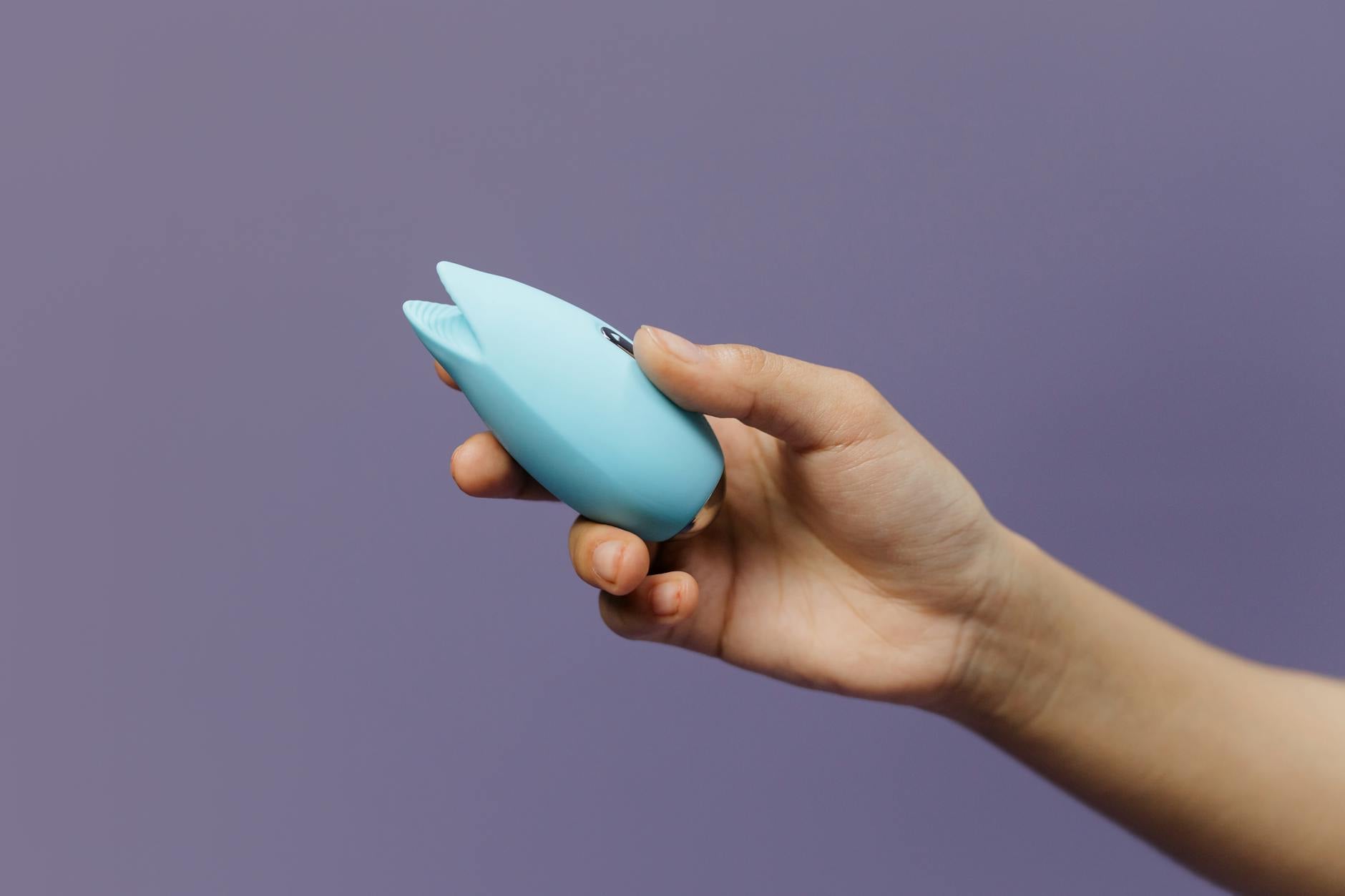
Photo by cottonbro studio on Pexels
That skill transfers everywhere. To partnered sex. To your own solo exploration. To the way you move through your body in general.
FAQ: Performance Anxiety and Pleasure
How long does it take to feel less anxious using a vibrator?
Most people notice a shift within 3-4 solo sessions. The key is consistency and patience. You're rewiring a neural pathway that's been there for years. It doesn't flip overnight. But you should notice your brain getting a little quieter each time you practice.
Can I use a lemon vibrator if I've never had an orgasm?
Absolutely. In fact, people who struggle with orgasm often find that removing the pressure to perform actually helps them access pleasure for the first time. The lemon vibrator is a tool for sensation, not orgasm. Orgasm may follow. It may not. Both are fine.
What if my partner wants to use the vibrator with me but that makes me more anxious?
Then that's valuable information. Your body is telling you something about trust, vulnerability, or timing. Solo use first builds your baseline. Once you know what your own pleasure feels like, adding a partner becomes less about performing and more about connection. You might also ask your partner to stay outside the bedroom while you explore first.
Is performance anxiety something I need therapy for?
It depends on the intensity and how much it's affecting your life. Mild performance anxiety often improves with solo exploration and shifting your mindset. Severe anxiety that shows up across multiple areas of your life might benefit from working with a therapist or counselor, ideally one who specializes in sexual health or relationship dynamics.
Can performance anxiety come back after I've worked through it?
Yes. Stress, relationship changes, body image concerns, and hormonal shifts can all trigger it again. That's not failure. It just means going back to the basics: solo time with your lemon vibrator, observation mode, no destination. You've already learned how to do this once. You know the way back.
Why do lemon vibrators specifically help with performance anxiety?
Clitoral vibrators remove the guesswork. They create consistent, predictable sensation that doesn't require you to do anything but receive it. That simplicity is powerful for an anxious brain. You're not managing a partner's pleasure, your body position, or the rhythm. You're just feeling. That focus naturally crowds out the performance narrative.
The actual bottom line
Performance anxiety doesn't mean your body is broken. It means your brain is doing its job too well. It's protecting you from perceived vulnerability.
A lemon clitoral vibrator isn't going to magic away that anxiety. But it gives you a concrete way to practice the thing that kills performance anxiety: presence. Each time you use it to notice sensation instead of judge it, you're training your nervous system to trust your body again.
That trust compounds. It shows up in other areas of your life. Your confidence in your own judgment improves. Your ability to stay present with pleasure improves. Your actual orgasms, if they happen, feel different. Better.
Start with solo exploration. Use your vibrator to practice being curious instead of critical. Let that skill build. Then bring it everywhere else.
Your body doesn't need to perform. It just needs permission to feel.
If you're ready to explore this deeper, consider reaching out to talk through your specific situation. And if you're looking to deepen intimacy with a partner while working through performance concerns, our guide on building deeper connection might offer some useful framework.