Let's address the actual barrier
It's not the toy. It's the story you're telling yourself about what the toy means.
When you're thinking about introducing a lemon vibrator to partner sex, your brain usually runs one of three scripts: "He'll think I don't need him." "She'll think I'm greedy or broken." "They'll judge me for wanting this." These aren't real. They're the ghosts of a thousand conversations you've never actually had, whispered by people who aren't even in the room.
Here's what actually happens when you introduce a clitoral vibrator to a partner who cares about your pleasure. Either they're relieved (finally, a way to give you what you actually want), or they don't care either way (it's not about them), or they're genuinely curious. The rejection storyline is almost never the real outcome.
Why the self-consciousness is real (even if the fear isn't)
We're taught that needing a toy means something went wrong. That good sex is friction plus time plus chemistry, and if that doesn't work, you're supposed to accept it quietly. You're not supposed to engineer a solution. You're especially not supposed to ask your partner to hold the engineering manual.
But pleasure isn't a pass-fail system. It's not "can you orgasm with penetration alone, yes or no." It's "what combination of sensations, timing, and mental space gets you there." A lemon vibrator is just information made physical. It says: this is what my body likes. That's not a criticism of your partner. That's data.
The self-consciousness also comes from exposure. Pleasure is private. Bringing a toy into the room means your partner can now see, literally, what turns you on. That visibility is vulnerable. It's normal to hesitate.
The conversation framework that actually works
Forget the big "we need to talk" energy. This isn't a State of the Union. Pick a moment when you're already talking about sex or desire or what's working. Not in the moment, not mid-act. Maybe you're lying in bed after, or you're alone together on a lazy Sunday. Casual proximity, low stakes.
Then say something like this: "I've been thinking about trying something new in bed. I want to use a vibrator. Not instead of you, alongside you. I think it would actually feel better for both of us if I could get there more reliably."
Notice what's in that sentence. You're claiming desire (not apologizing for it). You're being specific (a vibrator, not "something"). You're reframing it as a team thing (better for both of us), not a solo project or a critique.
If your partner asks "Why?" the answer is truthful but brief: "Because my body responds faster to vibration than to other kinds of touch. That's just how I'm wired." You don't need to defend it or explain the whole anatomical backstory unless they ask.
How to normalize it before you even bring the toy out
One move that defuses a lot of the awkwardness: talk about it when you're not in bed. Mention it once or twice in passing. "I ordered that vibrator we talked about." "It arrived today." Let it exist in conversation before it exists in the bedroom. Repetition erases strangeness.
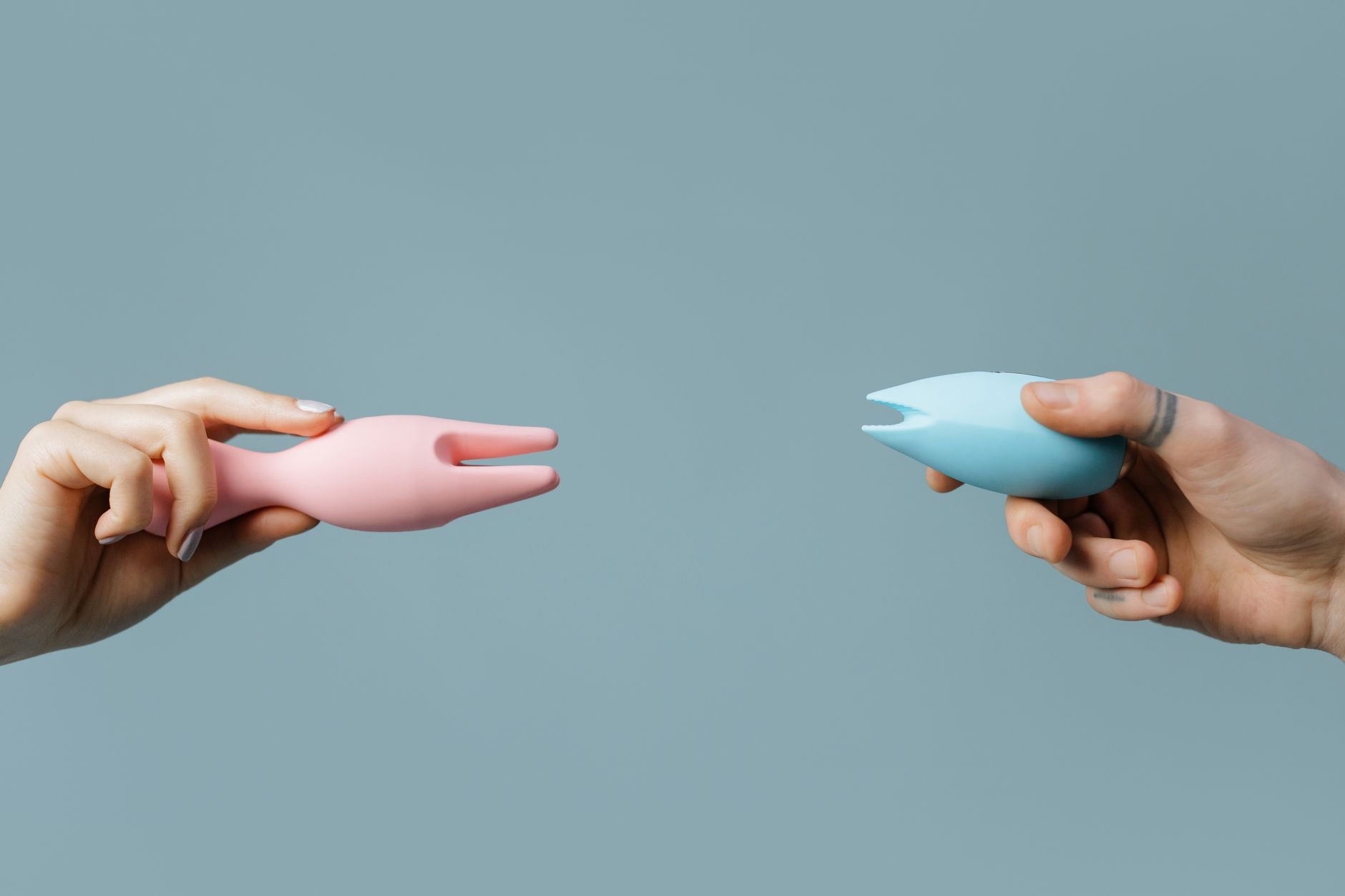
You can also show them. Not as a performance. Just "Here, this is the one. It's small. It's quiet. It has five patterns." Demystifying the object helps. It's not a mysterious substitute for them. It's a tool. A pink or blue or sometimes lemon-colored tool.
The first time you use it together
Don't make it a whole thing. Introduce it the way you'd introduce a new position. You're already being intimate, things are already happening, and you say: "I want to try using this now." Or you can start with it solo in front of them. That feels less like a surprise and more like you're saying, "This is something I do, and I wanted to share it with you."
Start on a lower intensity setting. You're not just discovering what the vibrator can do. You're also discovering how it feels with a partner present, how it feels during penetration if that's part of your sex, how it feels with their hands on you too. The learning curve is part of the intimacy.
If it feels weird, say so. "This is new for me, so I'm figuring it out as I go." Most partners find that honesty hot, not off-putting.
What to do if your partner does push back
It's rare, but it happens. If your partner expresses hesitation or worry, stay curious instead of defensive. "What's your concern?" might uncover something real ("I don't know if I'm doing this right") or something from their own history. You can work with both.
If they say something like "I should be enough," that's them caught in the same script you were. Respond with patience: "You're enough for a lot. This is just one more thing that helps me get where I want to go. It doesn't take anything away from you."
But also know this. If your partner is actively hostile to your pleasure, that's not a toy problem. That's a relationship problem. A good partner wants you to feel good. They might need a conversation or some reassurance, but they want this to work for you.
The after-sex conversation matters more than you think
Once you've used the vibrator together, check in. Not formally. But something like: "That felt good. What did you think?" Their answer tells you a lot. They might say it was hot. They might say it felt weird but they're game to try again. They might say they loved watching you come. All of those are good outcomes.
If there's awkwardness, acknowledge it directly. "This is new. It might feel strange for a bit. But I'm glad we're doing this." Normalize the adjustment period.
From here on out, the vibrator is just part of your toolkit. Not special. Not loaded with meaning. Just another way to have good sex.
Why lemon vibrators work especially well in this context
Air-suction clitoral vibrators like Lemon Sucker's lemon vibrator are quieter and more focused than traditional buzzing vibrators. That means less distraction for your partner and more sensation for you. They're also smaller, which feels less intrusive in a partnered moment. A lot of the self-consciousness comes from feeling like you're bringing something bulky or obvious into the room. A sleek clitoral vibrator doesn't have that energy.
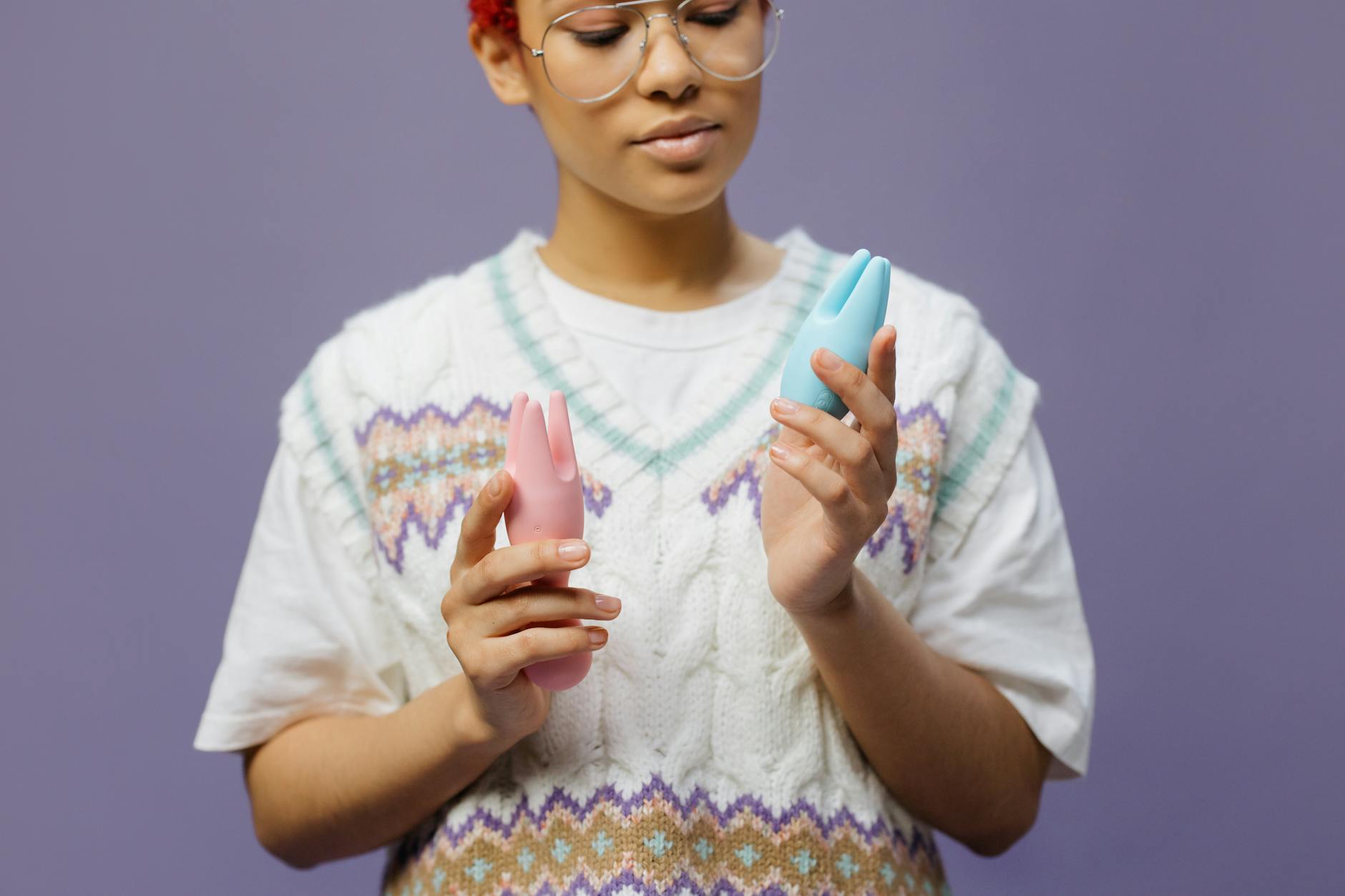
Photo by cottonbro studio on Pexels
The bigger picture
Introducing a vibrator to partner sex is actually introducing your partner to your body. You're saying: here's what I like. Here's what gets me there. Here's what partnership looks like when we're both invested in my pleasure, not just yours.
That's not self-conscious. That's leadership. You're leading your own experience instead of hoping someone else figures it out. And most partners, when they understand that frame, respect it completely.
If you're still nervous about the conversation, remember this. Your partner presumably wants you to feel good. A tool that helps that happen isn't a threat. It's a gift to both of you.
People also ask
How do I know if my partner will be supportive of using a vibrator together?
If your partner is curious about your pleasure, asks what you like, wants to know what feels good, or has mentioned toys themselves, they're likely to be supportive. The best indicator is past behavior. How have they responded when you've asked for something you needed before. If they've generally been willing to adjust for your comfort, this will probably go the same way. If you're in a relationship where your needs are regularly dismissed, the vibrator isn't the real issue.
Can I use a lemon vibrator during penetrative sex with a partner?
Yes. Many people use clitoral vibrators during penetration because it adds stimulation that makes orgasm more likely or more intense. Positioning varies depending on your body and what feels comfortable. You or your partner can hold it, or you can experiment with angles. The key is communicating what you need in the moment.
What if using a vibrator makes me come too quickly and my partner wants longer sex?
This is a common worry and worth addressing directly. You can use the vibrator only at the end, after other kinds of touch. You can use it on a lower setting to prolong things. You can also separate the two conversations: sometimes you have longer sex without the vibrator, sometimes you use it to get there faster. Most partners actually prefer this because they know you're going to get there rather than wondering if it's going to happen.
Is it weird to introduce a vibrator if we've been together for years without one?
Not at all. People's needs and desires shift. You might have felt too self-conscious before. You might have only recently realized what your body actually responds to. You might have learned about a product that sounds perfect for you. Any of these are valid reasons to introduce something new. Years together doesn't mean you've tried everything or that you can't evolve. In fact, longtime partners often appreciate the newness.
How do I ask my partner to help me use the vibrator if I feel embarrassed?
Start by using it alone a few times so you're not learning it for the first time with them watching. Then, when you're already intimate, you can guide them. "Can you hold this here?" or "I want to use this, can you keep doing what you're doing?" Explicit requests feel less awkward than vague suggestions. They also give your partner clear direction, which most people prefer over guessing.
What if my partner wants to use a vibrator on me but I'm not sure I want that?
Take your time. You don't have to let them use it just because they're curious. If you want to try it, set clear boundaries: "Start on the lowest setting," or "Just for a few seconds to see how it feels." You're in control. Your comfort matters more than their curiosity. If they respect that, they're someone worth exploring with. If they push, that's information too.
The confidence part
Self-consciousness about pleasure with a partner usually dissolves once you realize that desire isn't selfish. It's the opposite. It's the thing that keeps you coming back to each other, literally and figuratively. When you own your pleasure, your partner gets to own theirs too. That's not weakness. That's the whole deal.
If you're ready to have this conversation but still nervous, remember that you've probably had harder talks before. This one just has better outcomes.
Ready to take the next step? If you need more guidance on navigating desire and intimacy in your relationship, we're here to help. Reach out at /contact and let's talk about what you need.