
Let's acknowledge what's really happening
Here's the thing: when a partner resists toys, it's almost never about the toy itself. It's about what they think the toy means. They're worried it replaces them, undermines their confidence, or signals that they're not enough. That anxiety is real, and dismissing it as insecurity won't help. You need to name it, validate it, and then reframe it.
Introducing lemon vibrators to a partner who's uncomfortable requires two parallel conversations. One is about the toy. The other is about your relationship, desire, and what you both actually want. Conflating them is where most couples get stuck.
Understanding why partners resist toys
Resistance breaks down into three categories, and each needs a different approach.
The "I'm not enough" anxiety. He (or she, or they) thinks a vibrator means your orgasms matter more, or that they're failing at their job. This is ego wrapped in love, and it deserves a real answer, not reassurance.
The "I don't understand it" discomfort. Some partners grew up with messaging that sex toys are weird, commercial, or outside the bounds of "normal" coupledom. They're not rejecting you. They're uncomfortable with unfamiliar territory.
The "I feel replaced" fear. This one stings because it's half-rooted in actual change. If you want to bring a toy into shared sex, the dynamic does shift. You're not having the same sex anymore. Your partner is sensing that accurately. The question is whether the shift is connecting or distancing.
The reframe that actually works
Stop presenting the toy as a solution to something he's failing at. Start presenting it as a tool for something you both want to explore together.
This reframe works: "I want us to have more pleasure, more often, and I think using this together could help both of us get there. It's not about you doing something wrong. It's about us expanding what we do right."
Notice what's missing: "I need this because you can't make me come." That's true sometimes, but leading with it guarantees defensiveness. Notice what's included: "we," "together," "expand." Those words matter because they're true and because they invite instead of accuse.
Starting the conversation (timing is everything)
Don't introduce a clitoral vibrator in bed. Don't bring it up right after unsatisfying sex. Don't spring it on him five minutes before you want to use it.
Instead, choose a calm moment outside the bedroom. Sunday morning coffee. A walk. Somewhere neutral where neither of you is already triggered or vulnerable.
Start with curiosity, not conviction: "I've been thinking about wanting to experience more sensation when we're together. I found this thing called lemon vibrators that uses suction instead of vibration, and I'm curious if you'd be open to trying it with me sometime."
If the response is "No, I don't feel comfortable," you don't argue. You ask: "What worries you most about it?" and then you actually listen. Not to argue back. To understand.
What partners actually need to hear
Once you know what he's worried about, address that specific fear.
If it's "I'll feel replaced": "This doesn't replace you. It's more like. you know how I use my hands when I touch myself? This is a different sensation, but you're still here, we're still connected, and it's for both of us."
If it's "Sex will feel different": "It will. And that could be good. We could discover new things together. Isn't that worth trying?"
If it's "I don't know how it works": "Let me show you. No pressure to use it yet. Just understanding." Then let him hold it, ask questions, realize it's not intimidating.
If it's "Sex is supposed to be natural": "So is eating fruit. We still use forks. Tools aren't the opposite of natural. They're just helpful."
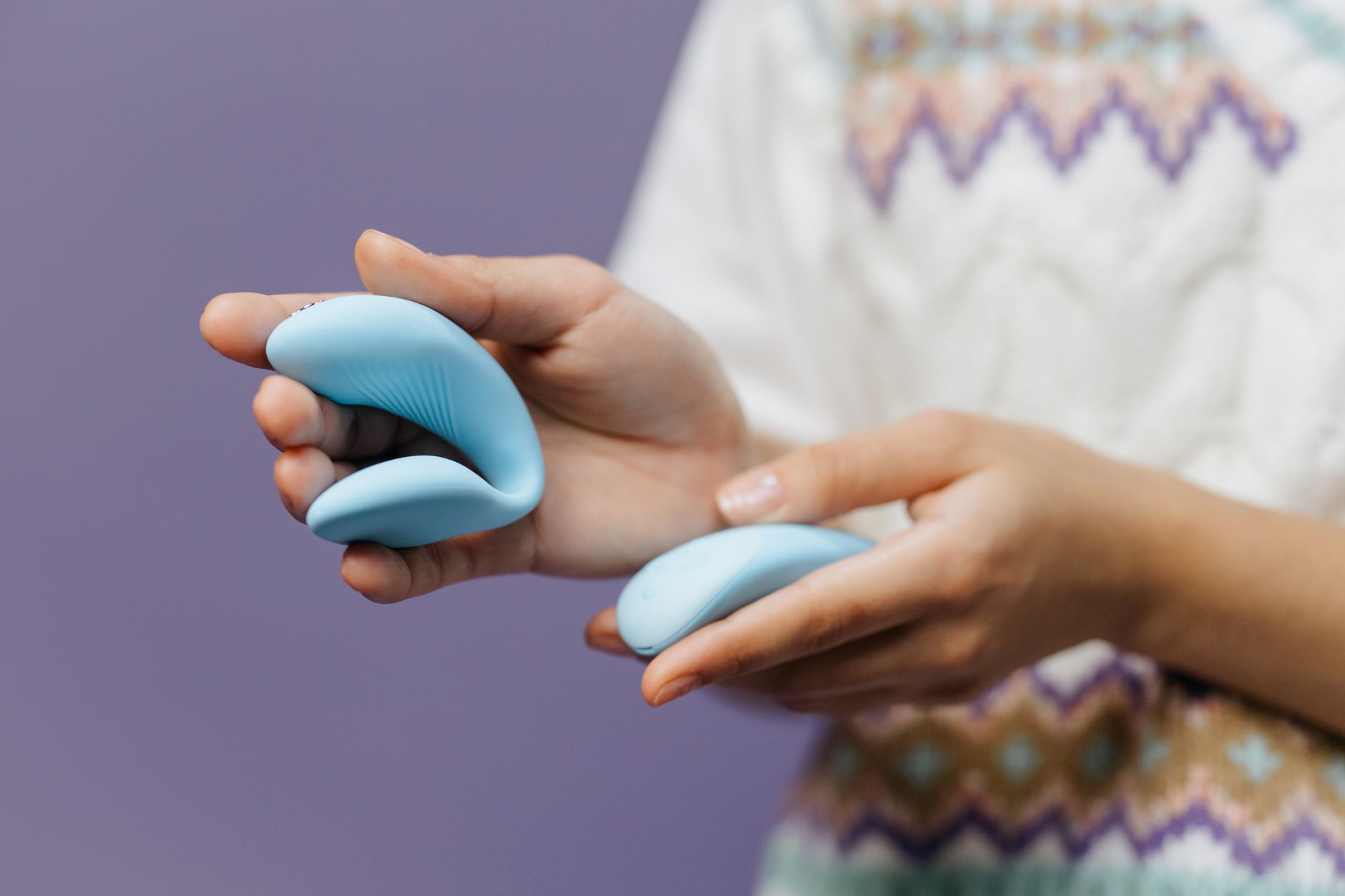
Photo by cottonbro studio on Pexels
Making the first use collaborative, not performative
If your partner agrees to try, don't treat it like a test. Treat it like exploration.
Start with him using it on you while you're together. Not during sex yet. Maybe during foreplay, or at the start of intimate time. Let him control the intensity and rhythm. This gives him agency and lets him see how your body responds. There's no failure condition here. Pleasure isn't the point yet. Discovery is.
Talk to him during: "That feels incredible." "Try a slower pattern." "Move it here." He becomes the person creating the sensation, which flips the narrative from "you need this because I'm not enough" to "I can make you feel this way, and that's hot."
After, talk about it neutrally. Not "That was amazing, we have to do this every time" (which sounds like you're now dependent on it). Not "It was nice" (which sounds polite and distant). Try: "That felt really good. I liked how you controlled it. Want to try it again sometime?"
Building comfort over time
One successful experience doesn't mean instant enthusiasm. Some partners need three or four positive exposures before resistance softens.
Don't ambush him with the toy every time you're intimate. Use it maybe half the time, and don't announce it like a big event. Normalize it. "Hey, want to use the lemon vibrator tonight?" Same tone you'd use asking if he wants to light candles.
Invite him to adjust settings, choose patterns, decide when to use it. The more agency he has, the less threatening it feels.
If he stays resistant after genuine effort, that's different information. It might mean this particular boundary is real for him right now, or it might mean the conversation hasn't landed yet. Either way, you have a choice: respect the boundary for now, get professional support, or recognize that mismatched comfort around pleasure is a relationship issue worth exploring deeper.
What changes when your partner comes around
When resistance melts, something shifts. You're not hiding your desires anymore. You're not negotiating pleasure in secret. You're building it together.
Many couples find that introducing a tool actually deepens connection because they had to talk about desire directly. You had to name what you wanted, and your partner had to choose to give it to you. That's intimacy.
You might also discover that his discomfort was really just unfamiliarity. Once he sees how lemon vibrators work, how your body responds, how he can be part of that pleasure, the threat evaporates. Some partners even become the ones who want to use them more often.
When to get outside support
If the conversation goes nowhere after a few genuine attempts, consider couples therapy. A third party can help untangle whether the resistance is about the toy, about control, about insecurity, or about deeper relationship friction that the toy just surfaced.
A good therapist won't push you toward toys if he doesn't want them. But they can help you both understand what the resistance is really protecting, and whether it's worth protecting.
Similarly, if you're using the toy as a workaround for incompatible desire or poor communication, the toy won't fix that. It'll just make the real problem easier to avoid.
FAQ
What if my partner says he feels emasculated by a vibrator?
Emasculation is usually about ego. Reframe it as enhancement. You're not replacing his contribution. You're expanding what pleasure looks like together. If he's still stuck on "real men don't need help," that's deeper than the toy. That's about his definition of manhood, and it might be worth unpacking with a therapist or trusted mentor.
Can I use a lemon vibrator solo even if my partner isn't into it?
Absolutely. Your solo pleasure is separate from partnered pleasure. You don't need permission. But if you're using it secretly, that signals shame, and shame often creates more relationship tension than openness would. Consider whether honesty might actually strengthen trust, even if he's not interested in participating.
What if I've tried talking about it and he flat refuses?
You have a few options. You can respect the boundary and explore solo pleasure privately. You can set a specific point in the future ("Let's revisit this in six months") and drop it until then. Or you can recognize that fundamental mismatches around pleasure, intimacy, or openness might indicate incompatibility worth examining.
Should I buy the toy before we talk about it?
No. Buying it first and then asking feels like you've already decided, and it puts him on the defensive. Talk first. If he's open, choose together, or let him pick the model if he wants input. The collaborative choice matters more than the toy itself.
How do I use a clitoral vibrator with my partner if he's still uncomfortable?
Start with what feels safe to him. Maybe that's him not watching. Maybe that's him in the room but not touching it. Maybe it's just him knowing it happened afterward. You're not obligated to make him comfortable with your pleasure, but you can move slowly enough that he has time to adjust. Over time, many partners shift from uncomfortable to curious to participating.
What if using lemon vibrators together helps my sex life but creates distance in other ways?
If introducing a toy fixes sex but creates tension elsewhere, the toy revealed a real problem. Maybe he felt disconnected already. Maybe you both did. Use this as information, not as reason to go back to how things were. Sometimes couples need help from a therapist to integrate new intimacy patterns into the relationship as a whole.
The bottom line
Your partner's discomfort is valid data, not a barrier you have to bulldoze. But your desire for pleasure is also valid. The goal isn't to convince him that toys are good. It's to create enough safety and understanding that he can choose to support your pleasure even if he's not initially comfortable.
That takes patience, honesty, and sometimes professional support. But when it works, couples often find that the conversation about the toy becomes the beginning of a much deeper conversation about desire, connection, and what you both actually want.
If you're ready to explore but need a partner who can listen and engage, consider reaching out to a couples counselor or a relationship coach. They can help you both get to yes, or at least to a place where you understand each other better.
For more on navigating pleasure in partnership, check out how to handle the dynamics when you want deeper connection or when you're rebuilding intimacy after disconnection. And remember: bringing a tool into your intimate life is a conversation worth having. You deserve to have it.