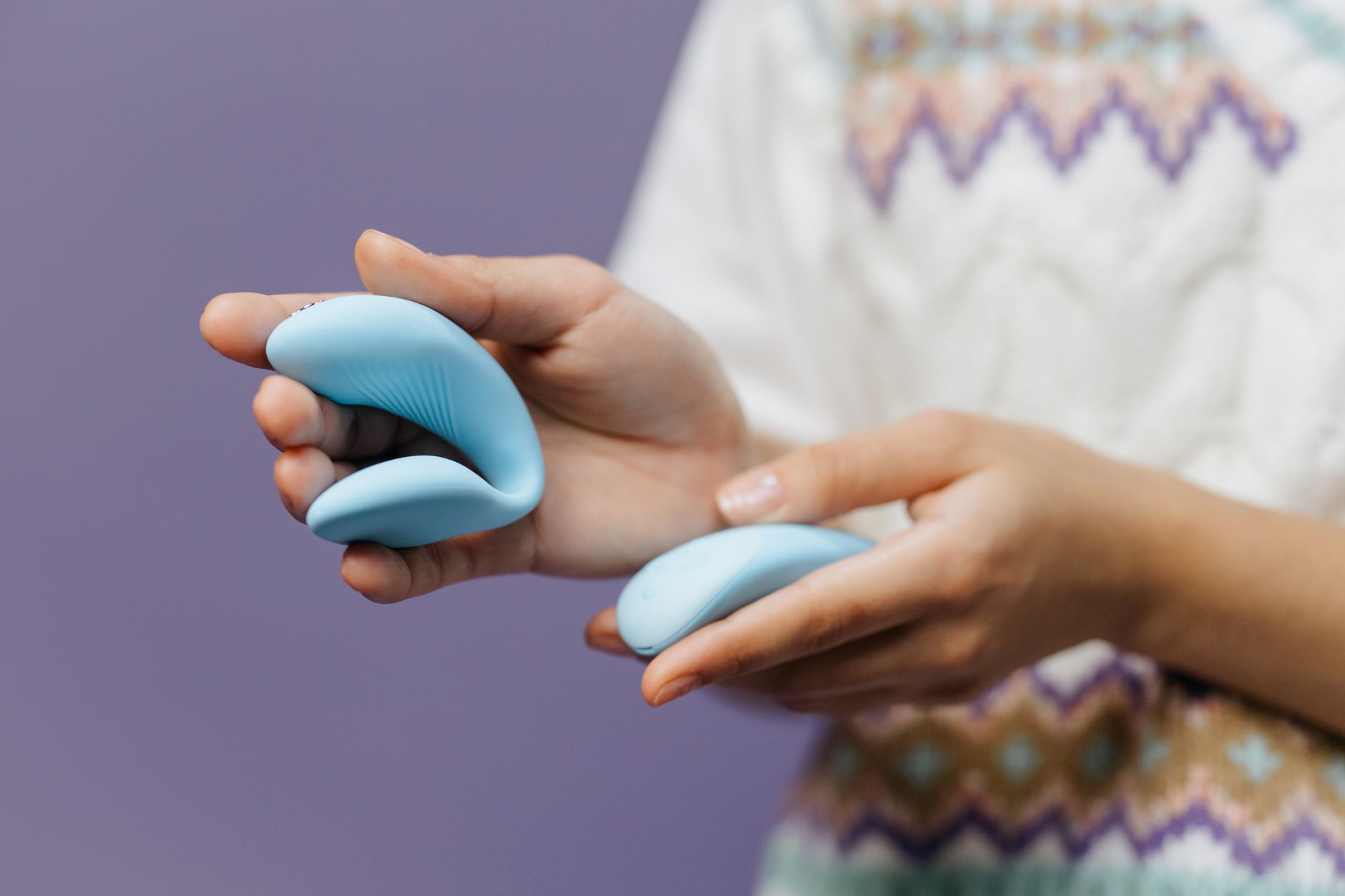
Let's start with the thing no one talks about
When both partners want to use lemon vibrators, or when one person brings a clitoral vibrator into partnered sex and the other person wants to try it too, something strange happens. The moment becomes charged with things that have nothing to do with pleasure. Comparison. Jealousy about who orgasms faster. Anxiety about whether you're "doing it right." The weight of performance. All because someone brought a toy into a space that used to feel simple.
Here's what I know from working with couples: the toy isn't the problem. The conversation you didn't have before the toy showed up is the problem. Once you untangle that, sharing lemon vibrators becomes genuinely fun. Maybe the best part of partnered pleasure.
Why couples get weird about this
It's not logical, but it's real. When one partner wants to introduce a clitoral vibrator into sex, the other partner sometimes hears: "What we do isn't enough." Or: "You're not enough." Neither is true. A lemon vibrator is not a judgment on your partner's hands or effort. It's a tool that works differently than a human body can work, full stop. But that logic doesn't survive the moment you're standing naked in a bedroom.
The jealousy and defensiveness make sense because sex, for most of us, still carries the old narrative. Sex is where you prove you matter to someone. Sex is where you should be enough. Introducing a vibrator can feel like evidence you're not. This is why the conversation has to happen first. Not during. Not after. Before.
The conversation that changes everything
Here's what I tell couples: sit down clothed, not in the bedroom, and say these things out loud.
"I want to try a clitoral vibrator together because..." (fill in the honest reason.)
Not "it's better than you," but the actual reason. Maybe it's: "I want to experience my body without mental effort for once." Or: "I want to come faster so we can stay together longer." Or: "I'm curious what it feels like." Or: "I've heard it's easier for me to relax with it." Whatever it is, say it. The person who wants the vibrator goes first.
Then the other person gets to respond honestly too.
Maybe they feel insecure. Maybe they're genuinely worried you're not attracted to them anymore. Maybe they're curious and have no ego about it. Whatever it is, this matters. Don't skip it because the conversation feels awkward. The awkwardness is the point. You're clearing it out now instead of during.
Then you agree on what "using it together" actually means.
Are you both using your own vibrators? Is one person using a vibrator on themselves while the other person is inside them or beside them? Is someone using a vibrator on the other person? These are different experiences, and they require different conversations. Don't assume.
When one person using a lemon vibrator is enough
Many couples find that only one person needs a vibrator to be present. Maybe one partner likes clitoral stimulation during penetration, and a vibrator handles that while the other partner stays focused on what they're doing. This actually reduces the mental load for both people. One partner isn't trying to rub the clitoris while being inside someone. The other partner isn't trying to come while simultaneously managing the awkwardness of someone else getting tired.
If this is your setup, the vibrator becomes less about comparison and more about logistics. It's easier. It's collaborative. It works.
One thing I've seen couples miss: if this is the dynamic, say it out loud too. "I'm not bringing this in because you're not enough. I'm bringing this in because you're busy doing something else and I want both things at once." It sounds obvious. It absolutely isn't, until you say it.
When both partners want their own vibrator
This is different. Some couples find that mutual vibrator use transforms the experience. You're side-by-side, each in your own body, each with your own intensity and rhythm, and somehow that creates more closeness than the pressure of partnered performance ever did.
If you're both using lemon vibrators or other clitoral vibrators during sex, a few things help:
Set an expectation about speed. Clitoral vibrators get results fast. If you're both coming in 5-7 minutes because you're both using toys, that's fine. But talk about whether that's what you both want. Some couples find that pace thrilling. Others feel rushed. There's no right answer, but you need to know which one you are.
Don't make it a race. This is where the weird jealousy sneaks in. If your partner comes first, don't interpret it as failure. They come faster with a vibrator. That's the tool doing its job, not your body being slower or less responsive. If anything, knowing your partner's pattern helps. You can adjust your own expectations instead of being surprised.
Build in time for non-vibrator touch too. This is crucial if you're both using toys regularly. Some couples find that vibrator sex becomes so efficient that the tender, slow, messy stuff disappears. And that's the stuff that actually builds intimacy. Use lemon vibrators, yes. But don't let them replace the other textures of touch.
The post-vibrator moment
Here's something nobody tells you: the moment after both partners come can feel weirdly lonely if you haven't set it up right.
You're both buzzing still, and you're both suddenly very aware of your separate bodies. The vibrators go down. And then what? Do you touch? Do you stay separate? Do you talk? Most couples panic a bit here and either rush to cuddling (which feels forced) or drift apart (which feels cold).
If you're both using vibrators, agree beforehand on what you want next. Maybe it's immediate skin contact. Maybe it's a few seconds of silence and then talking. Maybe it's you holding the vibrator for your partner while they come down from theirs. Whatever it is, decide it together. Don't improvise when you're vulnerable.
When one partner isn't into it (yet)
Some people are protective of partnered sex. They worry a vibrator means you don't need them. They worry about the logistics being complicated. They worry you'll enjoy the vibrator more than them. All of this is normal.
If your partner isn't ready for shared vibrator use, here's the thing: don't push. But do keep the door open. Use a lemon vibrator during solo play. Let them see that it's just a tool in your pleasure toolkit, not a replacement for them. Sometimes the fear dissolves once they understand viscerally that a vibrator can't give you what another person gives you. It's literally a different thing.
And if your partner wants to try watching, let that be enough for a while. You don't have to jump to simultaneous use. Some couples spend months with one partner enjoying vibrators solo while the other watches and gets comfortable. That's not slow progress. That's healthy pacing.
The rhythm of using vibrators together
Once you've talked through the logistics, one thing makes the experience less clinical: rhythm. If you're both using vibrators, try starting together. Turn them on at the same time. Match intensities for a while. Then drift. Then sync up again. It creates a sense of connection without the pressure of having to perform at someone else's pace.
If one of you is using a vibrator, the other person can find their own rhythm. You're not locked into one tempo. This is actually more flexible than traditional penetration, where tempo has to be negotiated in real time.
What changes when both partners embrace it
Couples who get through the conversation piece and actually integrate vibrators into their sex life often report something surprising: more intimacy, not less. Because you're not performing. You're not managing someone else's pleasure while attending to your own. You're allowing each other to have your own experience at the same time you're connected.
It's vulnerable. It requires trust. It requires talking about things that feel uncomfortable to name. But couples who do this work usually find that the vulnerability is the actual intimacy.
A lemon vibrator isn't a fix for connection. But for couples who are already solid, who already communicate, who already have genuine affection for each other, integrating clitoral vibrators into shared pleasure can deepen things. It removes the impossible demand that one person's body do everything another person's body needs. And that relief, that sharing of the load, actually brings people closer.
People also ask
Should I use a vibrator if my partner feels threatened?
Not yet. Work with them first. The vibrator will still be there in three months. What matters now is whether they feel secure enough to trust that your pleasure isn't a referendum on them. Have the conversation. Listen to what they're afraid of. If they're genuinely afraid you don't love them, a vibrator won't solve that. A couples therapist might help. Once that fear settles, the vibrator becomes negotiable.
Can both partners use the same vibrator?
Technically yes, but it's usually weird. Clitoral vibrators are designed for one person's anatomy. Sharing one feels awkward fast. Get separate vibrators if you both want them. It's not expensive, and it removes the logistics problem. Many couples find that individual lemon vibrators create more freedom anyway.
What if my partner comes too quickly with a vibrator and I don't?
Talk about it first, not in the moment. Ask: is the speed something they enjoy or something they want to slow down? Some people actually appreciate that vibrators get them to orgasm faster. Others feel rushed and want to stay present longer. If you're mismatched on speed, maybe they use the vibrator and you don't, or you use toys at different times. There's no rule that says both people have to come simultaneously.
Is it normal to feel jealous when a partner uses a vibrator?
Completely. Most people feel a twinge of something when they first see a partner use a vibrator effectively. It doesn't mean you have a bad relationship. It means you absorbed the cultural narrative that your body should be enough. That narrative is getting quieter. Your jealousy is normal and fixable if you talk about it.
How do I know if my partner will enjoy using lemon vibrators with me?
You ask. Not in the bedroom, not when you're already turned on. Sit down and say: "I'm interested in exploring vibrators together. I'm not sure what you think about that. What comes up for you?" Then listen. No judgment. No pressure. Some partners will say yes immediately. Some will need time. Some will want to watch first. All of those are fine.
What if we try it and it doesn't work for us?
Then you stop. Put the vibrator away. Talk about what felt off. Maybe the intensity was wrong. Maybe the moment felt too clinical. Maybe you both just prefer the simplicity of skin. It's okay. The vibrator experiment doesn't need to define your sex life. It's one option, not a mandate.