The thing nobody names out loud
One of you wants sex twice a week. The other wants it once a month. Both of you are completely normal. Neither of you is broken. And yet somehow, this mismatch has become the third person in your relationship, quietly eroding trust.
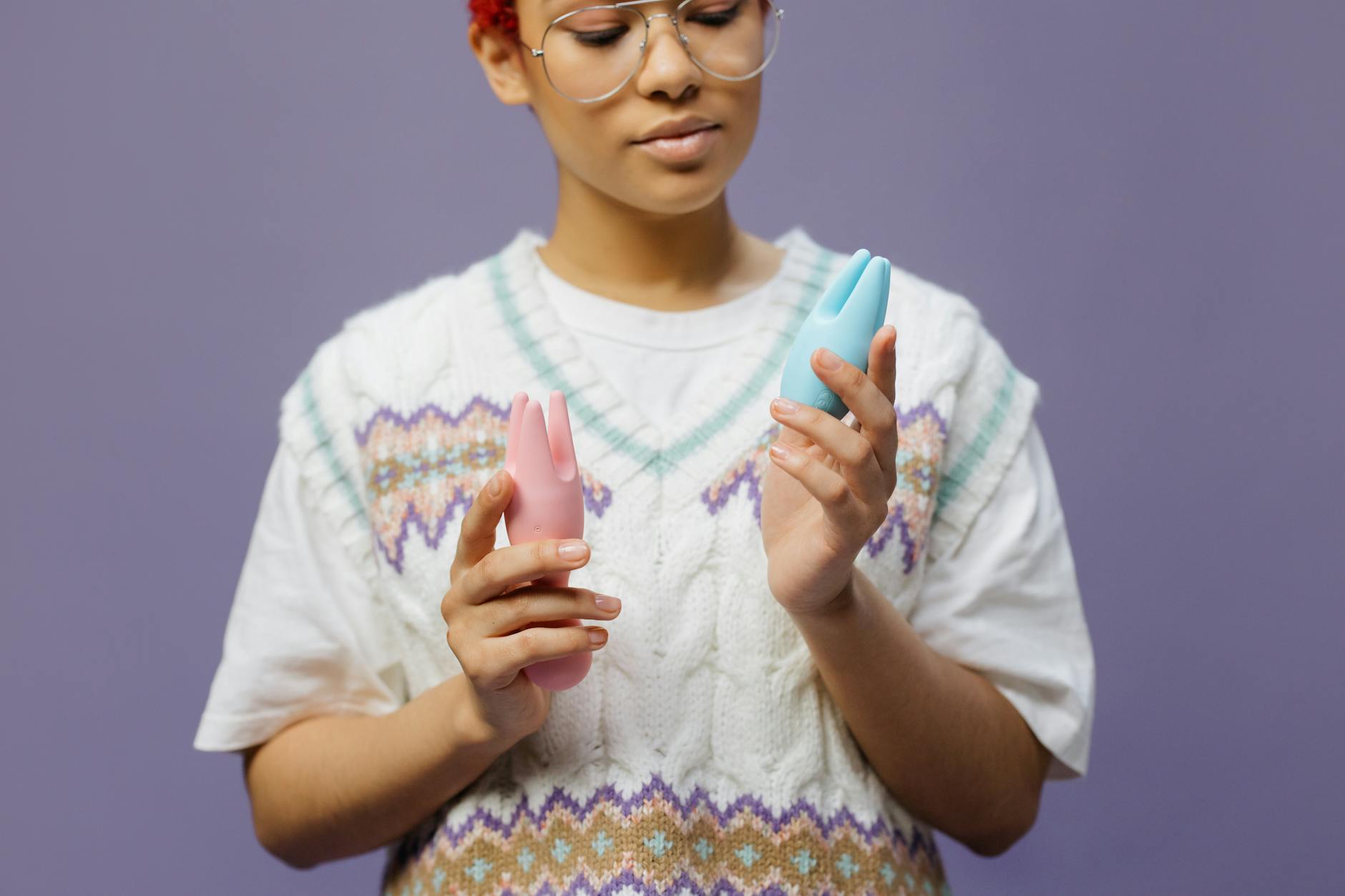
Here's what I see in my practice: couples with desire gaps rarely talk about it directly. Instead, they negotiate through resentment. The higher-desire partner feels rejected. The lower-desire partner feels pressured. Sex becomes transactional, and eventually it stops happening at all. This is where lemon vibrators, and lemon sexual toys more broadly, actually change the conversation.
Why this matters more than you think
Mismatched libidos are one of the top reasons couples report feeling disconnected. Not because different desire levels are inherently a problem, but because we've been taught that synchronized want is the only acceptable version of "normal." It isn't. About 70 percent of long-term couples experience some degree of desire mismatch at some point. The ones who stay connected aren't the ones who magically sync up. They're the ones who stop treating it as a failure.
Using lemon vibrators as a couple changes this dynamic in three ways. First, it removes the pressure for your body to perform on someone else's timeline. Second, it creates a new way to be intimate that isn't penetrative sex, which actually reduces the stakes. Third, and this is the clinical part, it can increase pleasure without increasing the frequency demand.
What libido mismatch actually looks like
You've probably experienced at least one of these scenarios. The higher-desire partner initiates, and the lower-desire partner says no. Over time, initiating stops. Resentment builds. Maybe the higher-desire partner starts masturbating more, which sometimes triggers insecurity in the lower-desire partner. ("Why do you prefer your hand to me?") Or the lower-desire partner feels guilty, and they force themselves into sex they don't want, which is terrible for everyone. Both people end up feeling worse.
Here's the other thing I see: the lower-desire partner often has a ton of other stuff going on. Stress, hormonal shifts, past trauma, medication side effects, relationship friction that lives outside the bedroom. The higher-desire partner interprets this as "they're not attracted to me anymore," which is usually wrong. Desire is contextual. It's affected by safety, energy, brain space, and whether you feel seen in the relationship.
How lemon clitoral vibrators reframe the conversation
When a couple introduces a lemon vibrator into their sexual routine, something unexpected happens. It's not about frequency anymore. It's about pleasure. And pleasure is way easier to talk about than "why don't you want me."
Using a lemon vibrator together gives the lower-desire partner agency. They can control their own stimulation, their own speed, their own intensity. There's no obligation to perform. There's no clock running. The higher-desire partner gets to be present and connected without the pressure of being solely responsible for their partner's orgasm. Both people can actually relax.
Lemon sexual toys, particularly suction vibrators like the Lem, are especially useful here because they work so reliably. Orgasm confidence matters. If the lower-desire partner has had trouble reaching orgasm with a partner present, that adds another layer of performance anxiety. A lemon clitoral vibrator removes that variable. You can focus on connection instead of outcome.
The practical conversation you actually need to have
Before you buy anything, you need to talk about what's actually happening. This is where I usually encourage couples to separate two conversations that usually get tangled up.
Conversation one: "My body wants sex more often than yours, and I feel rejected." This is legitimate and needs to be heard.
Conversation two: "I'm willing to meet somewhere in the middle, but I need something different than what we've been doing." This is where the door opens.
That second conversation is where lemon vibrators belong. It's not a solution to the mismatch, which honestly can't be "solved." It's a different way to be intimate together.
I recommend framing it this way: "I want to find ways we can feel close that don't put pressure on either of us. What if we tried something that lets you have control over your own pleasure?" Curiosity instead of pressure. That changes everything.
How to actually use them together without awkwardness
Three tips from my couples who report this working well.
First, start when you're both already in a sexual headspace. Don't introduce a lemon vibrator as a pivot from rejection. Use it as part of foreplay you're both genuinely interested in. The lower-desire partner should want to be there, not feel coaxed. This is crucial.
Second, take turns being the person who controls it. If you're using a lemon clitoral vibrator together, sometimes the lower-desire partner uses it on themselves while the higher-desire partner watches. Sometimes the roles reverse. This isn't about one person doing all the giving. It's about both people experiencing pleasure.
Third, talk about it afterward. Not like a performance review. Just "That felt good" or "I liked that you were present without hovering." The conversation is what cements the intimacy, not the toy itself.
The secondary benefit nobody talks about
Here's something that surprised me when I first noticed it: couples with desire mismatches who start using lemon sexual toys together often report that the mismatch itself bothers them less. This isn't because their libidos suddenly match. It's because they've created a new way to be sexual together, separate from the frequency question. The higher-desire partner feels wanted. The lower-desire partner feels less pressured. Both people get pleasure.
One client told me, "We were having sex twice a week or not at all. Now we have penetrative sex once a week, and we use a lemon vibrator together twice a month. It's fewer total encounters, but it feels so different. There's no resentment." That's not luck. That's what happens when you stop trying to solve the mismatch and start building around it.
The part about guilt
If you're the lower-desire partner, you might feel guilty. Like you're "not enough" and a vibrator is compensation. It isn't. It's a tool that acknowledges you're different people with different bodies. Using one together is actually a sign of respect, not failure.
If you're the higher-desire partner, you might feel like the vibrator is a consolation prize. It isn't that either. It's a chance to learn how your partner experiences pleasure, which actually deepens intimacy in ways that just getting more frequent sex wouldn't.
When to talk to someone else about this
If desire mismatch is paired with resentment so deep you can barely look at each other, a sex-positive therapist can help. If medication or hormones are affecting libido, a doctor is your first call. If you have a history of sexual coercion or pressure, a trauma-informed therapist is worth the investment.
But if you're in a basically solid relationship where you just have different desire levels, lemon clitoral vibrators and honest conversation can genuinely change how you feel about sex together. You don't have to want the same things at the same frequency to be intimate. You just have to be willing to build something different from what you were told intimacy should look like.
Closing the gap without closing off
Mismatched desire doesn't have to mean a dead bedroom or a relationship slowly calcifying under unspoken resentment. It can mean you get to know your partner's pleasure in a way couples with "compatible" libidos never do. You get to be creative. You get to communicate directly about what you actually want instead of dancing around rejection.
Lemon vibrators are just tools. But they're tools that say, "Your pleasure matters. My pleasure matters. We don't have to match to matter." That conversation, more than anything else, is what heals a desire mismatch. Everything else is just logistics.
FAQ: Mismatched Libidos and Couples' Intimacy
How do I bring up using a lemon vibrator if my partner thinks toys mean something is wrong with us?
Framing is everything. Don't lead with "we have a problem." Lead with "I want to explore something new together." You might say, "I've been reading about clitoral vibrators, and I'm curious if you'd be interested in trying one together." If they push back, ask what they're worried about. Often it's about feeling replaced or inadequate. You can say directly: "This is about us exploring pleasure together, not about me needing something you can't give." That's usually the truth, and it usually lands.
What if I'm the lower-desire partner and I'm worried this will make my partner expect sex more often?
This is a fair concern, and you should name it. Tell your partner: "I'm interested in trying this, but I want to be clear that it doesn't change my baseline desire for frequency." If they push back on that boundary, that's actually valuable information about what's driving the mismatch. Sometimes the real issue isn't about frequency at all. Sometimes it's about feeling chosen, and that's a conversation worth having with someone trained to hold it.
Do lemon suction vibrators actually work better for couples than regular vibrators?
Yes, and here's why. They're less intimidating to new users because they're less intense at the baseline settings. They're less likely to cause numbness if someone's sensitive. And honestly, they just feel different. When couples are trying something new together, something that feels genuinely novel can spark real connection. That said, the best toy is the one you're both actually comfortable with. If traditional vibrators work, use those.
How long does it actually take for things to feel less resentful?
If you're having honest conversations and trying something new together, you usually feel a shift within two to four weeks. The pressure lightens. Sex feels less transactional. That said, if resentment has been building for years, this isn't a quick fix. It's a turning point. After that, you might need deeper work with a therapist to process what came before.
What if we try this and it just makes things feel more awkward?
Some couples aren't ready to use toys together, and that's okay. But awkwardness the first time is normal. It doesn't mean it won't work. You might laugh. You might feel weird. That's actually healthy. Shared awkwardness is bonding. If it feels genuinely bad, pause and talk. "That felt off. What would make this feel better?" is a conversation that itself heals distance.
Is there research showing this actually helps with desire mismatch?
There's solid research showing that introducing variety into sexual routines reduces resentment and increases relationship satisfaction. There's also strong evidence that partnered pleasure is more intimacy-building than solo performance. Most research on sex toys and relationships shows that couples who communicate openly about desires and use tools together report higher satisfaction. But honestly, the research isn't the point. Your relationship is the point. What matters is whether it works for you two.
If you're navigating desire mismatch and want to explore this further, connection strategies for couples with different needs covers the practical side in detail. For deeper relationship work around intimacy and unmet needs, rebuilding after relationship strain might resonate.
Your pleasure matters. Your partner's pleasure matters. And wanting different frequencies doesn't mean either of you is wrong.