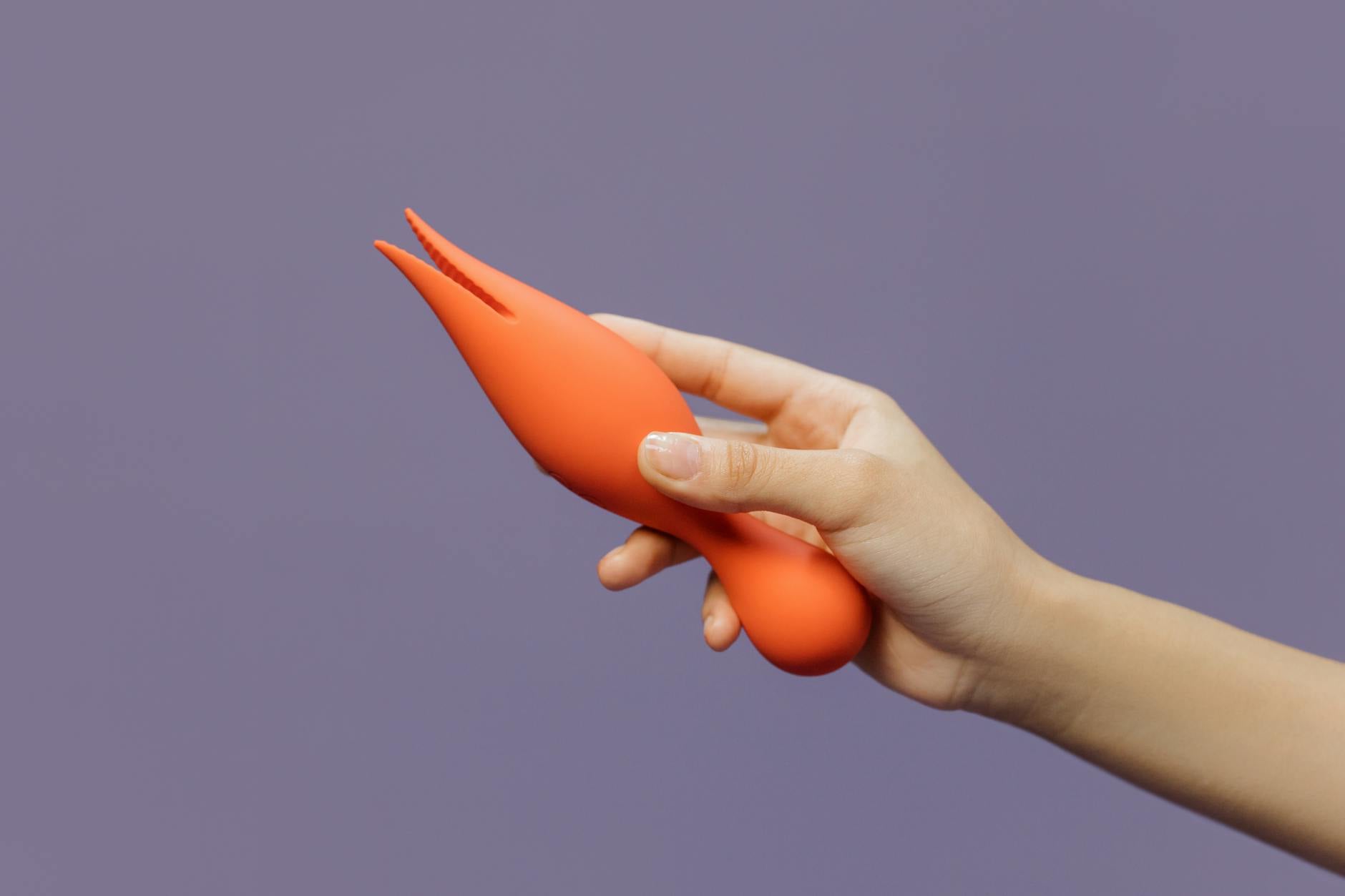
Here's the thing nobody tells you about lemon vibrators
The exact same lemon clitoral vibrator doesn't work the same way for every body. I know that sounds obvious, but most guides treat lemon vibrators like they're universal. They're not. Your anatomy, tissue sensitivity, and nerve distribution are wildly personal, which means the technique that gets your friend off in seconds might do nothing for you—or worse, feel uncomfortable.
The good news? Once you understand how your specific body responds, lemon vibrators become exponentially better.
How clitoral anatomy actually varies
Your clitoris isn't just the visible part. The internal structure branches down and around your vaginal opening, and the depth, angle, and size of that hidden anatomy differs significantly from person to person. Some people's internal clitoral tissue sits closer to the surface. Others have it positioned further back or to one side.
This matters because it changes where direct stimulation feels best. Some people need the lemon vibrator pressed directly on the clitoral glans. Others get more sensation from indirect contact on the hood or the sides. The angle you hold the device, the pressure you apply, and how long you hold it there are all shaped by this anatomy.
Tissue sensitivity also varies. Thicker tissue can handle more intensity without pain. Thinner, more delicate tissue responds better to gentler patterns or indirect contact. Neither is better—they just need different approaches.
The angle question: finding your sweet spot
Most people assume you should hold a lemon vibrator straight on, perpendicular to your body. That's one option. It's not always the best one.
Try tilting the device slightly—15 to 30 degrees—so the tip contacts the side or lower part of your clitoral glans instead of dead center. This works brilliantly for people whose internal clitoral structure angles backward or sideways. It also distributes pressure more evenly across tissue, which can feel less intense and more sustained.
Angle also matters if you have a sensitive clitoris. When you tilt the vibrator, you're using the curved side of the device rather than the pointed tip. This softens the contact without reducing vibration intensity. Many people who've had lemon vibrator sensitivity find that a simple angle shift—not changing the pattern or turning down intensity—transforms the experience.
Experiment slowly. Start at 0 degrees (straight on), then gradually tilt left, right, or down. You're mapping your own anatomy. The angle that makes you think "oh, that" is the one to anchor on.
Pressure: less is genuinely better, then more
Here's what most people get wrong about lemon clitoral vibrators. They assume harder pressure equals stronger sensation. It often does the opposite.
Light pressure—barely touching—can actually amplify vibration because it reduces the damping effect of your own muscle tension. When you press hard, you're partly counteracting the vibration with your body's resistance. Too much pressure can also numb the area temporarily.
Start with barely-there contact. Let the vibrator do the work. You should be able to move it microscopically with small hand movements, not holding it in a death grip. If you're white-knuckling the device, you're working against yourself.
Once you've found the rhythm and angle that works at light pressure, then experiment with gradually increasing it. You'll notice a sweet spot where the sensation intensifies without becoming overwhelming. For many people, this is 40 to 60 percent of the maximum pressure they can physically apply.
If you have thick tissue or lower baseline sensitivity, you might genuinely need more pressure. That's fine. But start light anyway and build. You'll find your real threshold.
Pattern selection for your response time
Lemon vibrators come with multiple patterns: steady, pulsing, waves, crescendos. Which one works is partly anatomy and partly what your nervous system prefers.
People with highly sensitive clitorises often do better with patterns that have rhythm and space—pulses with gaps between them, gentle waves. The breaks give your nerve endings a chance to reset, preventing that numb-out feeling. If steady vibration makes you feel overstimulated or makes sensation fade after a minute or two, try switching to a patterned mode.
People with less sensitive tissue or thicker clitoral structure sometimes respond better to steady, consistent vibration that builds gradually. Patterns feel choppy or don't provide enough continuous stimulation.
Your baseline sensitivity also shifts. Recovering from lemon vibrator sensitivity after frequent use often means temporarily switching to gentler patterns, which many people find work better anyway long-term.
Body position and what it changes
Your position during use affects what parts of your clitoris receive stimulus. Lying on your back gives direct, symmetrical contact. Lying on your side angles the device differently and can target the less-obvious part of your clitoral structure. Some people find they're capable of a completely different type of orgasm depending on position.
If you've been lying down, try sitting up. If you've been using the device while lying on your back, try reclining at a 45-degree angle. These micro-shifts change tension in your pelvic floor and alter which nerve pathways get prioritized.
Position also affects your partner's involvement, if you have one. Using lemon vibrators with a partner requires different positions than solo use. Spooning offers different angles than facing each other. The technique that works solo might need adjustment with someone else in the picture.
Lubrication and how it changes everything
Whether lemon vibrators work better with lubricant depends partly on your own natural lubrication and tissue thickness, but here's the real answer: lubrication reduces friction, which means you feel vibration more purely without the sensation of the device dragging across skin.
For people with thinner tissue or lower natural lubrication, water-based lube makes direct contact feel possible instead of uncomfortable. For people with thicker tissue, lube reduces the pressure needed to feel sensation, which can actually be better for endurance.
Water-based is your friend with silicone toys—it won't degrade the material. Silicone-based lubes damage silicone toys, so skip those.
If you're not naturally very wet, lube isn't a sign something's wrong. It's a tool that changes the sensation. Many people find lube transforms a decent experience into a remarkable one.
Warm-up time as technique
Your body needs blood flow and arousal to respond optimally. Jumping straight to the strongest pattern at full intensity rarely works as well as gradually building.
Start with light external touch—your hands, your partner's hands, something else entirely. Spend 5 to 10 minutes getting aroused. Then introduce the lemon vibrator at a lower intensity. Increase the pattern and pressure gradually over another 5 to 10 minutes.
This isn't just foreplay theater. It's logistics. Your clitoris swells with arousal, which changes what angle and pressure work best. Your nervous system becomes more responsive. Your muscles relax instead of tensing in anticipation.
People who skip warm-up and go straight to intensity often wonder why the device isn't working. It usually is. Their body just isn't primed yet.
The refractory period question
After an orgasm, your clitoris becomes temporarily very sensitive—almost too sensitive to touch. Some bodies recover in a few seconds and can go again immediately. Others need 5 to 30 minutes.
If you want multiple orgasms, you need to know your own timeline. Start touching gently before you think you're ready. If it's uncomfortable, wait longer. If it feels ready, keep going. The technique shifts here: lighter pressure, slower buildup, possibly a different pattern than what got you there the first time.
This is pure biology. Respecting your refractory period means more reliable, better orgasms overall.
FAQ
Can I use the same technique with every lemon vibrator?
Basically, yes, but different designs have slightly different contact surfaces. A lemon clitoral vibrator like the Lem has a specific tip shape, which means the angle and pressure sweet spots might shift if you switch devices. The fundamentals—finding your angle, starting light, using patterns strategically—stay the same. But give yourself a few tries with each new device to relearn the specifics.
What if no angle or pattern feels right?
That's worth attention. It can mean you need more warm-up time, more lube, or a different type of stimulation altogether. Some people genuinely respond better to wand vibrators or indirect stimulation. Choosing between lemon vibrators and wand vibrators might clarify what your body actually wants. It's also worth asking whether you're under stress or dealing with something that's affecting arousal.
Does body weight or size change how techniques work?
Not directly, but positioning comfort does. If you're larger or have mobility considerations, certain positions might not work well. Find what's comfortable for you first, then apply these techniques within that position. Your anatomy and nerve response are what matter, not your body size.
Why do my orgasms feel different than my partner's?
Anatomy, baseline sensitivity, nervous system wiring, and experience all play a role. Different doesn't mean worse. It's actually useful information—it tells you what to focus on. What feels amazing for them might feel meh for you, and vice versa. That's not a problem. It's why exploration is necessary.
Is it normal if I can't orgasm with a lemon vibrator even though I can other ways?
Yes, that's common. Lemon clitoral vibrators work brilliantly for some people and less well for others. It depends on how your clitoris responds to that specific type and intensity of stimulation. You might need different patterns, angles, or warm-up. Or you might just prefer something else. You don't need to force a device to work if it doesn't suit your body.
How long should each session be?
There's no standard. Some people climax in two minutes. Others need 15 to 20. Some days are faster than others. The technique isn't about speed—it's about finding what works for your body on that particular day with that particular mindset. Pressure off about duration means you can actually pay attention to sensation.
The real takeaway
Your body's anatomy is distinct. The way your clitoris responds to vibration, pressure, angle, and pattern is utterly personal. That's not a limitation—it's actually freedom. Once you understand your own body's preferences, lemon vibrators stop being a guessing game and become genuinely effective.
The technique that matters most is attention. Notice what angle makes you think "yes." Notice what pressure feels expansive instead of numb. Notice how position changes sensation. Notice your warm-up needs and refractory timeline. That's not overthinking it. That's the difference between an okay experience and a really good one.
Your pleasure is worth that attention. And if you want more personalized guidance on finding what works, reach out—we're here to help.