
Let's name the tension that lives in your bedroom
One of you wants sex three times a week. The other wants it once. Or maybe once a month. One person initiates constantly. The other person feels like they're always saying no. The initiator starts to feel rejected. The person being pursued starts to feel pressured. Everyone leaves the conversation feeling guilty, inadequate, or resentful. Sound familiar?
Desire mismatch is one of the most common relationship friction points I see in my practice. And here's what surprised me early on: it almost never gets solved by talking about it more. What shifts everything is when couples stop treating desire like a light switch (on or off) and start treating it like a dimmer that works differently for different people.
Lemon clitoral vibrators change this dynamic. Not by magically equalizing desire, but by separating the two conversations that usually get tangled together: "I want sex" and "I want you to want it with me."
Why mismatched sex drive feels like a relationship failure (when it isn't)
We're fed a story that great couples have naturally aligned sex drives. One person wants it. The other automatically wants it too. They sync up. It's effortless. This is both false and wildly unhelpful.
Research by sex therapists shows that about 45% of partnered people experience some level of desire mismatch. It's not rare. It's not pathological. It's normal. But because we don't talk about it, couples usually conclude that mismatched desire means incompatibility, or that the lower-desire partner is broken, or that the higher-desire partner is too much.
None of that is true.
Here's what's actually happening: people have different baseline desire levels (some biological, some situational), different responsive desire versus spontaneous desire patterns, different stress thresholds, different relationship histories, and different associations with pleasure. One person might genuinely want sex once a week. The other genuinely wants it three times. Both are normal. Both are valid. Both can exist in the same relationship without anyone failing.
The problem isn't the mismatch itself. It's the shame and pressure that usually shows up around it.
How responsive desire changes everything
I've worked with hundreds of couples where the "lower desire" partner isn't actually lower desire. They're responsive desire. Meaning their desire doesn't spontaneously arrive in their body on its own schedule. It shows up in response to touch, attention, or arousal.
Spontaneous desire feels like a random craving. Responsive desire feels like "Oh, that actually feels good. I want more." One isn't better than the other. But if you're with a spontaneous-desire person who's waiting for you to spontaneously want them, tension builds.
This is where lemon vibrators create actual space. When a higher-desire partner can meet their own need for pleasure without requiring their partner to match their spontaneous desire, everyone relaxes. The pressure lifts. And often, when the pressure lifts, the lower-desire partner's responsive desire actually shows up.
I've had clients tell me: "When my partner stopped needing me to be in the mood before they could have pleasure, I suddenly got interested more often." The relief of that permission changes everything.
The specific ways lemon vibrators solve this
Let's get practical. Here are the three most common scenarios I see and how clitoral vibrators actually help.
Scenario 1: Your partner wants sex, you don't, but you don't want to reject them again. This creates a spiral of low-pressure duty sex, resentment, and disconnection. Instead: your partner uses a lemon vibrator for their own pleasure while you're present. You might touch them, talk to them, be intimate without penetration. You're connected without performing desire you don't feel. The difference is huge. You're not saying no. You're saying yes to closeness on different terms.
Scenario 2: You want sex less often, they want it more, and you're worried about incompatibility. A clitoral vibrator lets the higher-desire partner access pleasure on their timeline without waiting for you to be available. You have sex twice a week when you're both interested. They use a lemon vibrator on the other nights. You're not competing. You're not keeping score. Both needs are being met.
Scenario 3: You have responsive desire, they have spontaneous desire, and the mismatch makes you both feel broken. When your partner can access their own pleasure independently, it removes the pressure for you to perform arousal on demand. Without that pressure, your responsive desire often surfaces naturally. Suddenly you're both more interested, just not on the same schedule.
How to actually introduce this conversation
The words matter here. Don't say: "I think we should get you a vibrator because you want sex too much." That's how it lands like rejection.
Instead: "I've been thinking about how we can both feel better about sex. I love you, and I want you to feel good. I also don't want either of us to feel like we're failing. What if you had a way to take care of your own pleasure on nights when I'm not in the mood? That would actually take pressure off me, and maybe we'd both relax more."
Or: "I've noticed we're both frustrated about how often we have sex. That's not because something's wrong with us. It's because we naturally want it at different rhythms. I want to find a way where you feel satisfied and I don't feel pressured. Can we talk about that?"
Then listen. The higher-desire partner might worry that using a vibrator means you're less interested in them. They might think it's a consolation prize. Name that directly: "It's not instead of us. It's alongside us. It takes the pressure off and makes everything better."
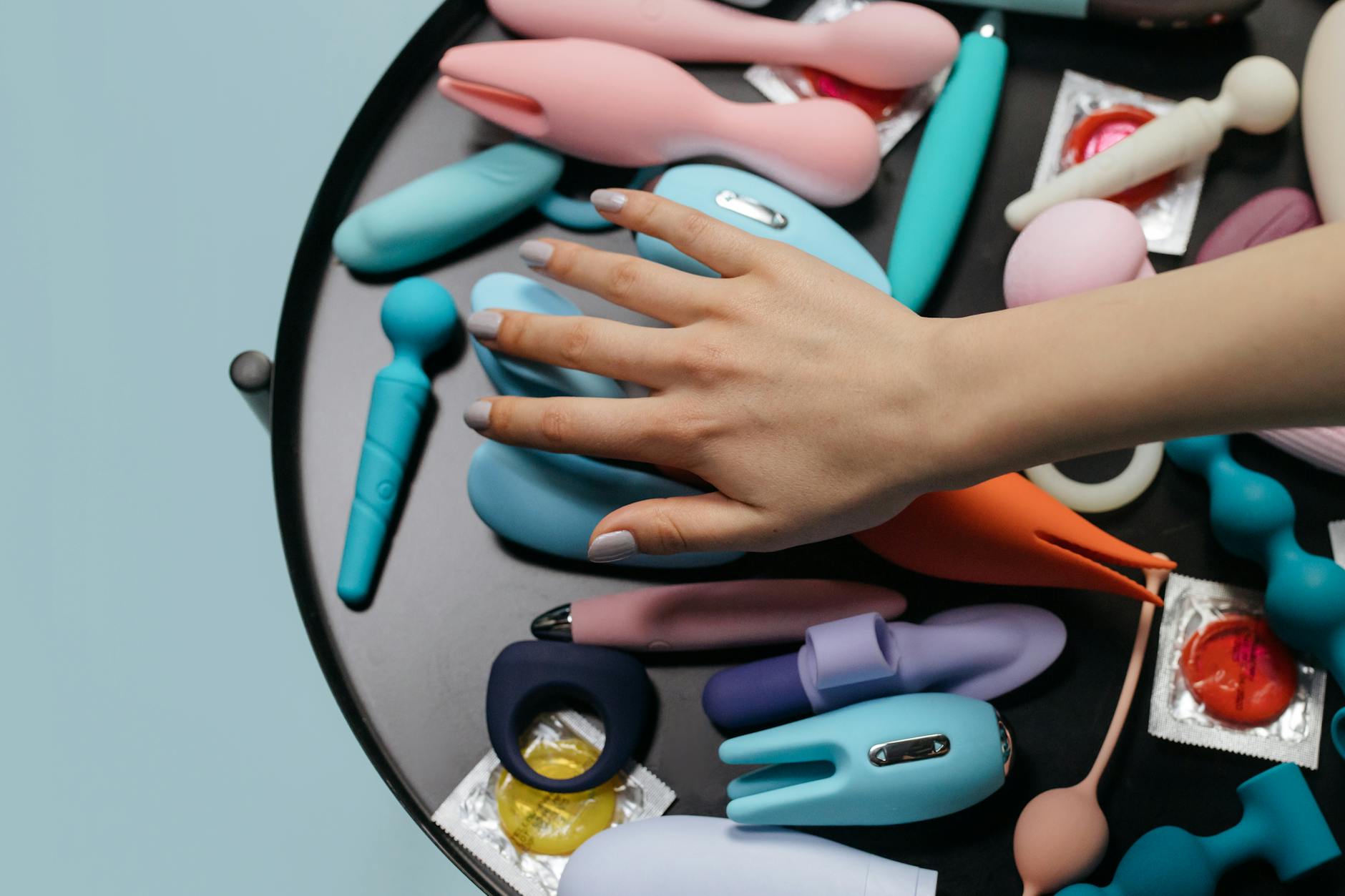
Photo by cottonbro studio on Pexels
The part people don't talk about: your pleasure too
Here's something I notice: when couples are navigating desire mismatch, the lower-desire partner often doesn't explore their own pleasure independently. They're so focused on the other person's need that they lose track of their own.
If you're the lower-desire partner, a lemon clitoral vibrator isn't just for your partner to use on nights when you're not interested in partnered sex. It's for you to explore what your own pleasure actually feels like on your timeline, without anyone else's desire in the picture.
Maybe you discover that you actually want sex more often than you thought. Maybe you realize that your low desire is situational (stress, medication, hormones) and changes with some space. Maybe you find out that you were conflating your partner's pressure with your own absence of desire. You can't know until you separate the two.
I worked with one couple where the woman swore she had no sex drive. Turns out her responsive desire flourished when she wasn't feeling pursued. Using a lemon vibrator on her own terms, exploring what actually turned her on without pressure, she reconnected with her own pleasure. Within two months, her desire increased noticeably, not because anything was wrong with her before, but because she finally gave herself permission.
What happens next
Does introducing a lemon vibrator solve desire mismatch instantly? No. Does it create the space where other solutions become possible? Absolutely.
When the higher-desire partner isn't constantly managing rejection, and the lower-desire partner isn't constantly managing pressure, you can actually talk. You can ask better questions. You can notice whether the mismatch is about desire itself or about stress, or disconnection, or changes happening in the relationship.
Sometimes couples use lemon clitoral vibrators this way for a few months and their baseline desire naturally shifts toward each other. Sometimes they use them long-term as part of how they manage different needs. Both are fine. The point is that it stops being a problem and starts being a solution.
If you're coming back to pleasure after a period of disconnection, lemon vibrators can help rebuild sensation and interest on your own timeline. If you're trying to stay connected with a partner while managing desire differences, clitoral vibrators can deepen intimacy without pressure. And if you're struggling with the emotional side of this conversation, that's where the real work often lives.
FAQ: The questions couples actually ask
Will using a vibrator make my partner less interested in partnered sex?
No. In fact, the research goes the other way. When people have independent access to pleasure, they're often more interested in partnered sex, not less. The pressure disappears. The resentment lifts. Sex becomes something you both want, not something one person needs and the other person tolerates.
What if my partner thinks I'm suggesting a vibrator because I don't want them?
That worry is real and common. Frame it as a solution to a shared problem, not a rejection. Say something like: "I want us both to feel good. Using a lemon vibrator means you don't have to wait for me to be spontaneously interested. It's not instead of us. It's so there's less pressure on both of us." Then follow through by staying connected in other ways. Touch them during their own pleasure time. Show up emotionally. That reassurance matters.
Is it weird to use a lemon clitoral vibrator when my partner is in the room?
Only if you make it weird. Many couples find that being present for each other's independent pleasure actually deepens intimacy. It's different from partnered sex. It's not less. It's just different. You might read together, or talk, or just be nearby. The point is that you're not performing or pretending. You're being honest about what you want.
My partner has a much higher drive and I'm worried they'll use a vibrator every day. Is that normal?
Yes. Some people have a naturally high-frequency need for pleasure. If it's happening every single day, you might notice whether it correlates with stress, or whether it's just their baseline. Neither is wrong. But if you're concerned about it affecting your relationship time together, that's worth discussing. The conversation isn't about the vibrator though. It's about what both of you need to feel connected.
Can we use a lemon vibrator together when we have different desire levels?
Absolutely. This is one of the most intimate ways to use one. Your partner stimulates themselves while you touch them, kiss them, or just watch. It combines independent pleasure with togetherness. Many couples find this is actually better sex than traditional partnered sex because there's no pressure for anyone to perform.
What if introducing a vibrator makes things worse?
Then the vibrator isn't the real issue. The real issue is probably communication, resentment, or disconnection that goes deeper. A vibrator can't fix those. But a therapist can. If you're stuck in a cycle where desire mismatch feels like the end of your relationship, that's a sign to get professional support. I've seen couples move through this with the right guidance, and it's almost always worth it.
The thing no one tells you
Desire mismatch isn't evidence that you picked the wrong person. It's evidence that you're human. Your bodies don't run on the same schedule. Your needs are different. Your pleasure looks different. That's not a bug in your relationship. It's something to work with, not against.
When you introduce tools like lemon vibrators, you're not trying to make your partner want what you want or vice versa. You're creating enough space for both of you to want what you actually want. And from that space, real connection usually shows up.
If you're struggling to navigate this, talking with a professional can help you understand your own responsive desire patterns and what's actually driving the mismatch. Sometimes it's biological. Sometimes it's relational. Often it's both. And almost always, it's solvable.